

Quick Answer
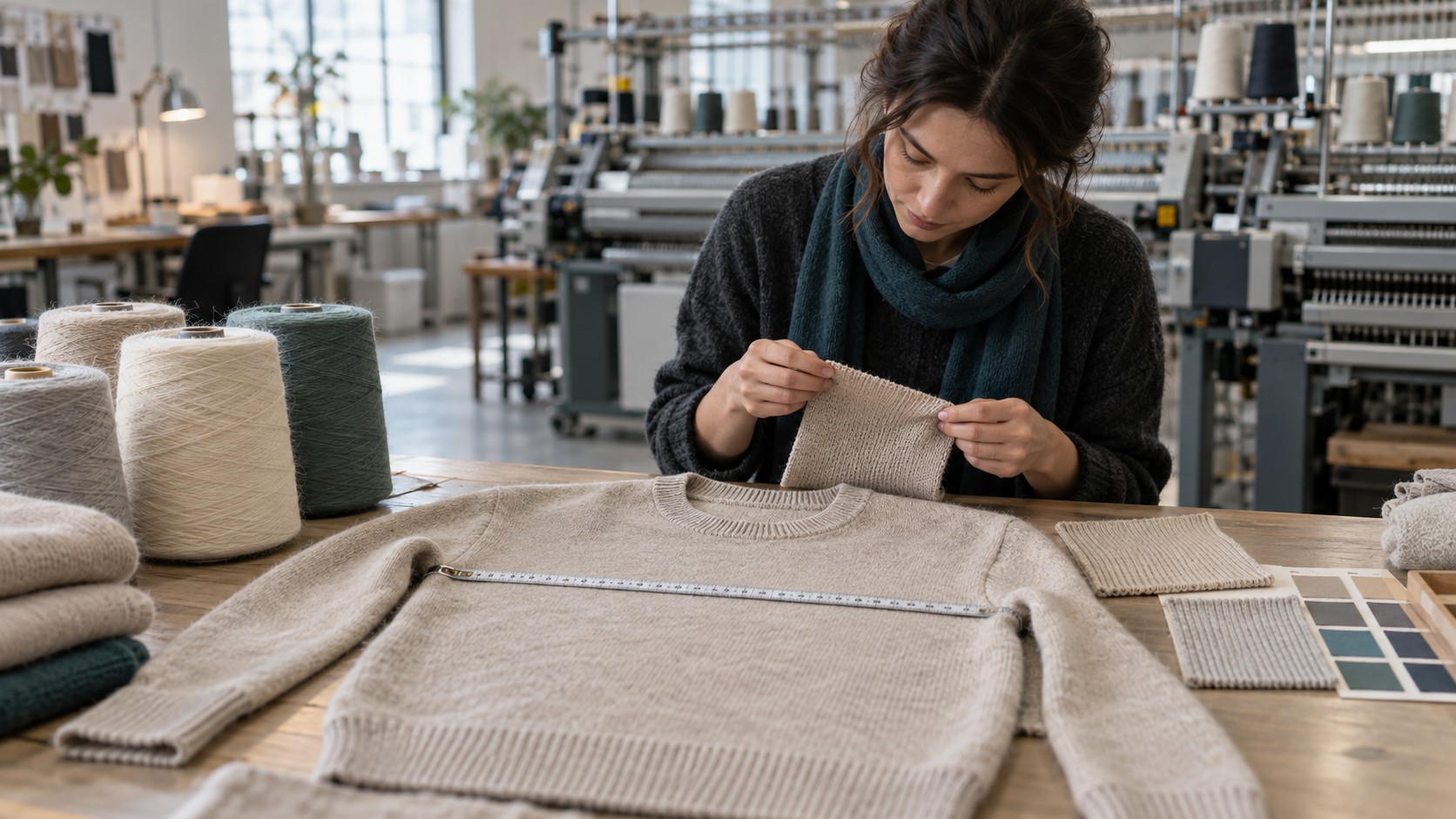
Low MOQ sweater production depends on more than a small opening order. This anonymous cashmere case examines how material availability, sample development, approval standards and production planning fit together. The focus is the production approach; no verified order quantity, sampling turnaround or commercial performance figure is presented.
This case concerns a cashmere development project described in YouTricot’s published production account. The customer’s identity is withheld with permission. The account is retained here as a process case, with recommendations distinguished from project results.
Scope: The project’s existence and permission for anonymous disclosure have been confirmed by YouTricot’s founder. Order-level supporting records have not yet been reviewed for this revision. This article therefore does not present numerical outcomes, test results or a customer endorsement.
Key Takeaways
- Assess garment quantity alongside yarn, colour, construction and finishing requirements.
- Develop the sample around the intended production route and retain a clear approval reference.
- Keep quality requirements explicit when the production quantity is reduced.
- Treat replenishment as a new planning decision, subject to material availability and scheduling.
In This Case Study
- The sourcing challenge
- Development and production planning
- Quality and material controls
- MOQ and replenishment decisions
- Results and evidence boundaries
- Lessons for other buyers
- Frequently asked questions
The Sourcing Challenge
The published account describes a need to plan smaller cashmere launches while retaining the desired softness, drape, fit and finishing. The central issue was how to connect a limited opening commitment with a workable development and production plan.
A short run still needs technical preparation. Yarn selection, programming, panel trials, size development, linking and washing cannot be assessed from the garment quantity alone. The case is useful because it brings those decisions together rather than treating MOQ as a stand-alone concession.
Low MOQ Sweater Production: From Brief to Approval
The workflow described in the account runs from the initial brief through yarn assessment, technical development, prototype review, approval and production planning. Its practical value lies in making the dependencies visible before an order is committed.
1. Clarify the Design Brief
The review starts with the reference image or preliminary tech pack, intended composition, hand feel, fit and size range. For a new project, the colour allocation, labels, packaging, destination and target delivery date should also be stated. See the knitwear tech pack and RFQ checklist for the broader submission requirements.
2. Check Yarn and Construction Feasibility
The account connects yarn composition, availability, colour and batch requirements with gauge and stitch selection. For another order, confirm whether the proposed yarn is available and whether custom spinning or dyeing changes the minimum commitment. A yarn reference should be assessed with the intended construction and finishing method.
3. Develop and Approve the Production Reference
The described approach develops the prototype with bulk production in mind. Before another project proceeds, the approval package should define measurements, tolerances, construction, hand feel and finishing, with a retained physical sample. Revisions should be recorded so the production team knows which version governs the order.
4. Confirm the Low MOQ Sweater Production Plan
Production planning follows approval. Confirm quantities by style, colour and size, material commitments, required checks and scheduling in writing. This article does not provide a verified production quantity or a calendar-day sampling commitment for the case.
Keeping Quality Requirements Explicit
The published account describes yarn-lot review, gauge and stitch-density checks, panel and garment measurements, linking inspection, washing-shrinkage review, hand-feel assessment and pilling-risk checks. These are reported workflow elements; completed inspection records and laboratory results have not been reviewed here.
For a new order, agree the required methods, acceptance criteria, inspection stages and responsibility for approving deviations. A pilling-risk assessment is not a laboratory pilling result. The approved sample provides a reference, while production records are needed to assess how the batch compares with it.
Read the knitwear quality control SOP for the wider process rather than duplicating that guide here.
Material Traceability and Certification Scope
No order-specific certification is asserted in this case study. Buyers should check the material supplier, yarn batch, declared composition and applicable documentation. Where certification is requested, verify the holder, validity and scope against the actual material or facility. General supplier information does not establish coverage for an individual order.
MOQ and Replenishment Are Separate Decisions
The account’s proposed model connects a controlled opening commitment with a later review of demand. It does not establish the size of the original order, a completed repeat order or a measured inventory saving.
Conditional MOQ: YouTricot may support 50 pieces per style per colour where technically feasible. Upstream yarn, dyeing, trim, testing and finishing minimums can require a larger commitment or separate charges. Confirm the final scope and commercial terms for each style and colour; this policy is not the verified quantity of the case.
Replenishment should be checked against available yarn and colour lots, the approved specification, production capacity and the required arrival date. A successful sample or initial order does not reserve material or scheduling for a future purchase.
Results and Evidence Boundaries
The retained value is the described production approach. Numerical manufacturing results and commercial outcomes are not presented as verified findings.
| Area | Described approach | Evidence boundary |
|---|---|---|
| Opening quantity | Plan a limited initial commitment before scaling. | Actual quantity and allocation are not verified here. |
| Sampling | Connect prototype development with the intended production route. | No verified start date, completion date or turnaround. |
| Quality | Retain material, construction and finishing controls. | No verified inspection outcome, test result or defect rate. |
| Commercial performance | Review demand before considering replenishment. | No revenue, margin, sell-through or inventory-saving figure. |
What Other Buyers Can Take From the Case
The main lesson is to connect order size with the technical and commercial plan. Small batch knitwear production should have explicit specifications, approval gates and quality requirements. A lower quantity alone does not establish a lower total cost, faster delivery or stronger sales.
For buyers evaluating a knitwear factory with low MOQ, the broader sourcing questions belong in the Low MOQ Knitwear Manufacturer guide for premium brands. This case remains focused on cashmere production planning.
For a separate published development account, see the London brand custom knitwear case study. Its project details and evidence limits are separate from this case.
Frequently Asked Questions
Why Is the Customer Anonymous?
The customer’s identity is withheld under the permission provided for anonymous disclosure. No brand endorsement is implied.
Can Another Project Use the Same Quantity or Schedule?
The proposed quantity and schedule must be assessed for that project. Yarn, construction, colours, sizes, revisions, finishing and required testing can change feasibility. This account provides no verified numerical benchmark to transfer to another order.
How Are Sampling Fees Handled?
Symbolic sampling fees apply and are fully deductible from later bulk production orders. Confirm the development scope, revision allowance, deduction arrangement and courier responsibility in the quotation. Separate material-development or testing charges should be identified before work begins.
See the knitwear sampling costs guide for further context.
About the Author
Frank, Founder of YouTricot. Frank has 20 years of industry and operational experience across Prato, Italy, and Dalang, Dongguan, China.
Discuss Your Cashmere Production Brief
Share your design reference or tech pack, composition, colours, size range, estimated quantity and target delivery date. Request a project-specific review of material availability, feasible quantities, sampling scope and quality requirements before committing to production.