Premium OEM / ODM Knitwear · Standard MOQ: 50 Pieces Per Style, Per Color
Per style
Per color
Typical sampling
Development support
Rule 01 · The calculation
One style. One color. Fifty pieces.
The MOQ is calculated for every style-color combination. Different styles or different colors cannot be added together to reach the 50-piece minimum.
Separate designs
Each color counts
Minimum pieces
The core policy
How each part of the rule works?
RULE 02
Different styles are calculated separately
A style is assessed by its pattern, measurements, gauge, stitch program and garment construction. Designs requiring different patterns or major construction changes are normally separate styles.
RULE 03
Each color has its own minimum
The 50 pieces cannot be split across colors. One style in black and cream begins with 50 black pieces plus 50 cream pieces.
RULE 04
Sizes can be planned within the style-color
The size breakdown can be discussed within an approved style-color combination. The final size range and ratio are confirmed during quotation.
RULE 05
Fifty pieces is the opening threshold
The final scope is confirmed only after the yarn, gauge, construction, finishing, labels, packaging and delivery requirements have been reviewed.
RULE 06
Custom colors need material review
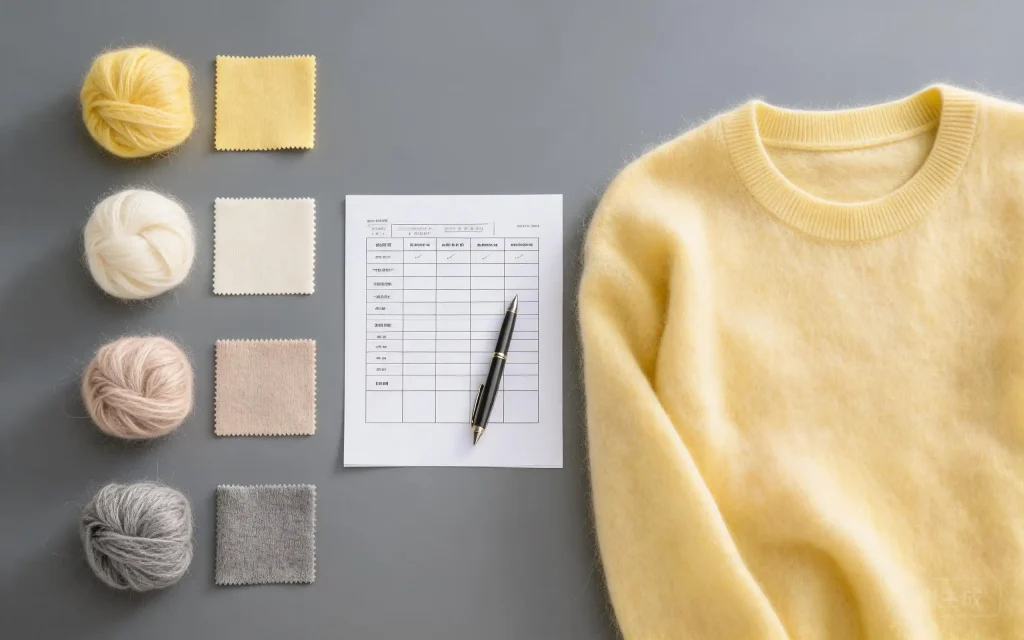
Custom-dyed yarn can carry separate mill minimums. Stock-supported colors or comparable yarn programs may be recommended for an opening order.
RULE 07
Changes may require a new quotation
Changes to yarn, color count, gauge, measurements, finishing or packaging after approval may affect MOQ, cost and timing.
The definitions behind the rule
What counts as one style and one color?
MOQ disputes usually begin with definitions. These examples show how YouTricot reviews a proposed style-color combination before quotation.
Understanding “one style”
The technical construction defines the style.
Pattern, measurements, gauge, stitch program and garment construction are reviewed together. A small visual change may still require a separate development route if it changes the production setup.
Same design in several approved sizes
One style
Crew neck and cardigan construction
Two styles
Same silhouette in two different gauges
Review
Different stitch program or major structure
Separate
Label or packaging change only
Review
*The final size range and ratio still require approval.
Understanding “one color”
Every colorway is planned independently.
Separate colors can require separate yarn allocation, setup, washing control and inspection. A custom color may also introduce a yarn-mill minimum beyond the garment MOQ.
Black and cream versions of one sweater
Two colors
One body color with matching trims
One colorway
Contrasting trims or color-block version
Review
Custom Pantone shade
Mill review
Jacquard or intarsia artwork color change
Separate
*Final classification depends on the stitch program and material allocation.
Planning examples for small brands
Turn a collection plan into a real quantity.
These examples are planning illustrations, not quotations. Final quantities remain subject to yarn and technical review.
Independent designer launch
One hero cardigan in one launch color
1 style × 1 color × 50
50 pieces
DTC product test
One sweater offered in two core colors
1 style × 2 colors × 50
100 pieces
New category test
Two styles with one color for each style
2 styles × 1 color × 50
100 pieces
Focused capsule collection
Three styles, each offered in two colors
3 styles × 2 colors × 50
300 pieces
Technical feasibility
Not every design behaves the same at 50 pieces.
A low MOQ knitwear factory must review the real production variables before confirming the order. If a specification is not stable at the opening quantity, YouTricot explains the constraint and proposes a workable adjustment.
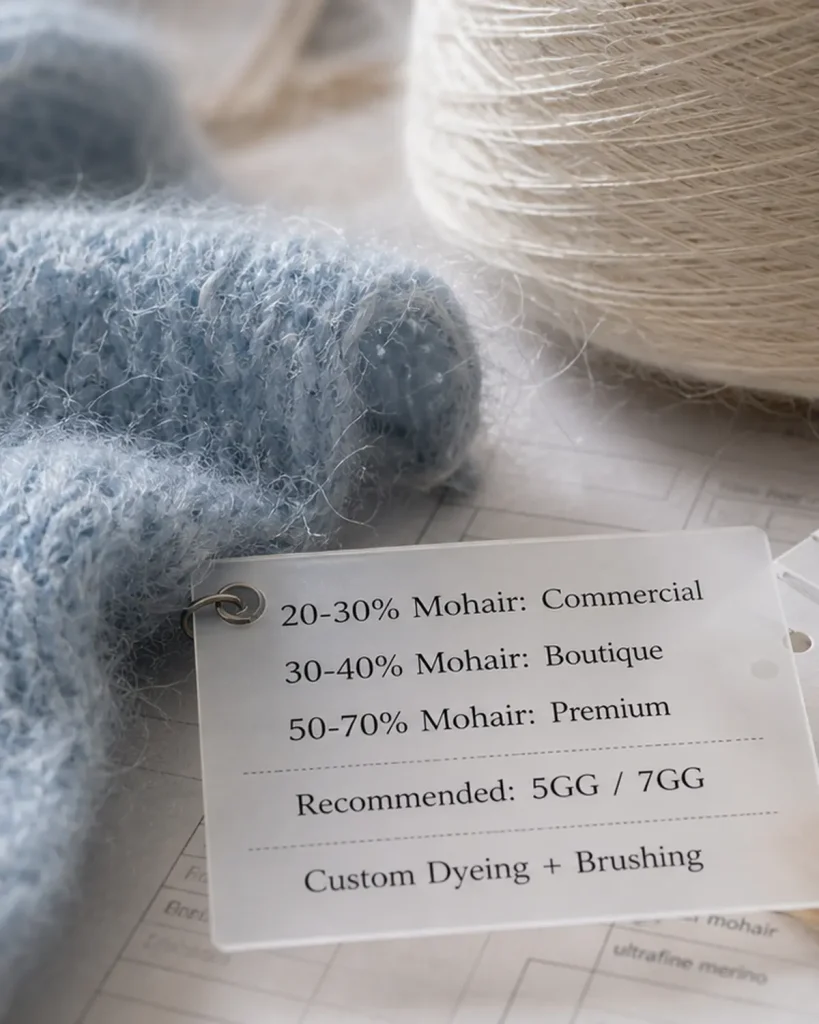
Yarn availability
Stock or custom color
Gauge and yarn count
Stitch complexity
Jacquard and intarsia
Washing and finishing
Labels and packaging
Delivery timing
Practical project fit
Which projects are most suitable for a 50-piece MOQ?
The opening quantity works best when the first launch controls unnecessary variables. More demanding specifications are not automatically rejected, but they require a separate feasibility review.
Usually more suitable
Stock-supported yarns and established color cards
Usually more suitable
Custom-dyed yarns and uncommon specialty fibers
Usually more suitable
One or two commercially important launch colors
Usually more suitable
Multiple colorways, jacquard or complex intarsia
Usually more suitable
A clear tech pack or precise approved reference
Usually more suitable
Frequent design changes during development
Usually more suitable
Standard washing, finishing, labels and packing
Usually more suitable
Special brushing, printing, trims or packaging
Usually more suitable
A focused size range with a workable ratio
Usually more suitable
Highly fragmented sizes or market-specific variants
Commercial rule
How does low MOQ affect knitwear pricing?
Low MOQ can reduce total opening inventory, but it does not automatically create the lowest unit price. Development and setup work are distributed across fewer garments.
01
Pattern making, needle drafting and machine programming still take place before production.
02
Yarn preparation, sampling, washing and finishing must be controlled for every approved style-color.
03
Labels, packing and final inspection remain part of the production scope even when the order is smaller.
04
The correct comparison is total inventory exposure, not unit price alone.
Lower opening inventory does not mean lower product standards.
Every quotation is style-specific. Yarn, gauge, stitch complexity, garment weight, color count, finishing and packaging all influence the final price. YouTricot confirms these variables before presenting commercial terms.
From inquiry to production
How the MOQ is confirmed?
01
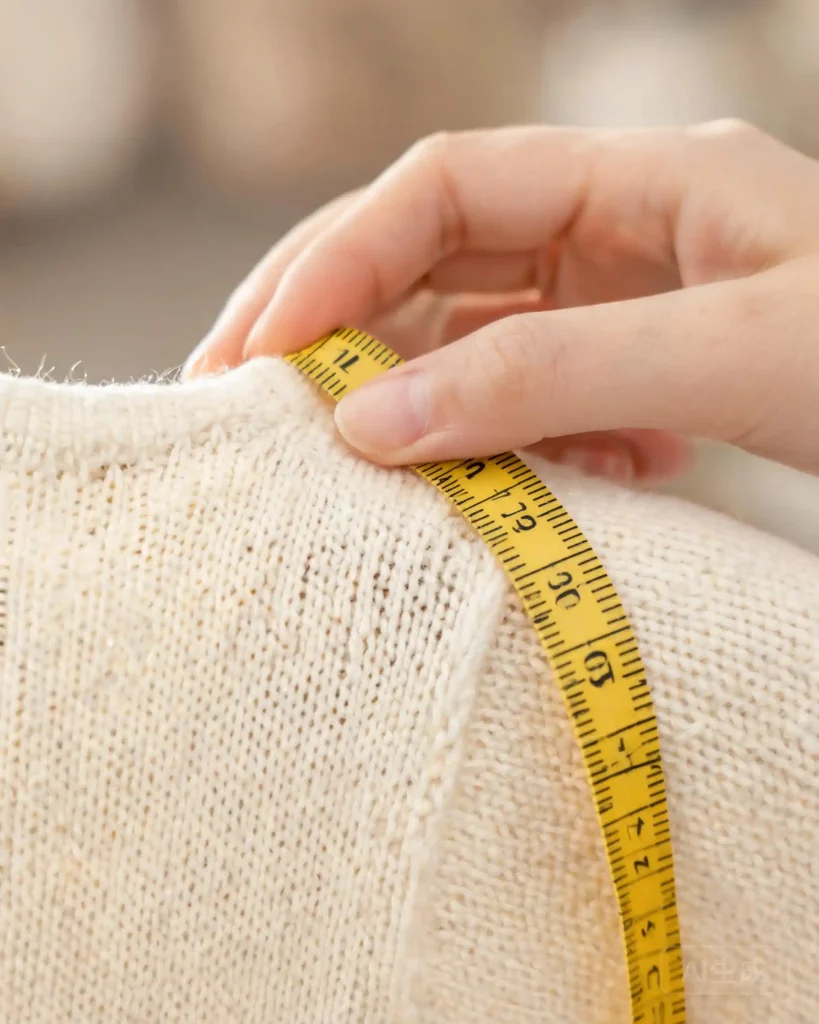
Send a tech pack, sketch or authorized reference with the yarn direction, number of styles, colors, size range and target delivery date.
02
Complete the feasibility review
YouTricot assesses material availability, gauge, stitch structure, construction, finishing and custom-color requirements.
03
Develop and approve the sample
Sampling typically takes 7–10 working days after design and yarn details are confirmed. Symbolic sampling fees are fully deductible from a later bulk order.
04
Confirm every style-color combination
The quotation records the final style count, color count, size plan, labels, packaging, production schedule and commercial terms.
05
Produce against the approved reference
The approved sample remains the reference for measurements, construction, hand feel, finishing and appearance during small batch knitwear production.
Quality rule
Does low MOQ change the quality standard?
No. Low MOQ changes the number of garments being produced; it does not remove the approved specification, production reference or essential quality checks.YouTricot maintains compliance with the OEKO-TEX Standard 100 and, where applicable, uses RWS-certified Merino wool and GCS-certified supply chains. Read the complete quality control SOP to learn about the full inspection process.
●
The approved sample remains the reference for measurements, construction, color, hand feel and appearance.
●
Material verification, knitting, linking, washing, measurements, finishing and packing remain part of the production workflow.
●
Compliance documentation depends on the selected yarn, certificate holder, certificate scope and supply chain.
●
A reorder requires a fresh check of yarn lot, color continuity and material availability.
●
Any approved variation should be documented before bulk production continues.
Before requesting a quotation
Low MOQ Knitwear RFQ Checklist
A clearer first brief produces a more reliable MOQ, price and production schedule.
Tech pack, sketch or authorized reference
Number of styles
Colors required for each style
Fiber composition or yarn direction
Gauge or target garment weight
Size range and estimated size ratio
Stitch, artwork or logo requirements
Labels, hangtags and packaging
Target market and documentation needs
Target delivery and expected reorder date
No complete tech pack? ODM development can begin from a clear sketch, authorized reference or structured product brief.
Rule 08 · Reorders
A useful low MOQ should support what comes next.
Before the first bulk order, YouTricot reviews whether the selected yarn and color are likely to remain available. When repeat production matters, discuss yarn reservation, stock-color continuity and expected reorder timing during quotation.
Exact continuity cannot be assumed for every seasonal or specialty yarn, so reorder planning should be part of the opening decision—not an afterthought.
People also ask
Low MOQ knitwear FAQ
Direct answers for small brands planning custom or private label knitwear.
The standard opening MOQ is 50 pieces per style, per color. Final feasibility is confirmed after reviewing the yarn, gauge, construction, finishing, labels, packaging and delivery requirements.
No. Each color requires 50 pieces for each style. One style in two colors starts from 100 pieces in total.
No. Different styles are calculated separately because they may require different patterns, measurements, stitch programs, knitting setups and finishing controls.
The size breakdown can be discussed within an approved style-color combination. The 50-piece minimum still applies to that style and color, and the final size ratio must be confirmed during quotation.
Possibly, but custom colors must be reviewed against yarn availability and the yarn mill’s dyeing minimum. Stock-supported colors are usually easier to plan at the opening quantity.
Yes. Sampling typically takes 7–10 working days after the design and yarn details are confirmed. Symbolic sampling fees are fully deductible from a later bulk production order.
The 50-piece rule is the standard opening threshold. Specialty yarns, custom dyeing, complex stitch programs or unusual finishing may create separate material or production constraints. These are explained before the order is confirmed.
Start with the real product
Request a style-specific MOQ review.
Send your style count, color count, design files, yarn direction, size range and target delivery date. We will confirm whether the project is practical under the 50-piece-per-style-per-color rule.