

Quick Answer
Polish wholesalers can source wholesale cashmere sweaters from Asia safely when they control more than the factory price. Before bulk production, verify the fiber composition, yarn batch, physical sample, measurements, shrinkage, pilling, finishing, documentation and supplier capability. For the sourcing model described in this guide, the MOQ is 50 pieces per style per color. Polish importers should also confirm EORI registration, CN/TARIC classification, customs treatment, Poland’s standard 23% VAT, textile labeling, REACH requirements, GPSR responsibilities and shipment documents before dispatch.
Key Takeaways for Polish Cashmere Buyers
1. Control the complete production process. Safe sourcing of wholesale cashmere sweaters requires verification of fiber composition, yarn quality, physical samples, measurement tolerances, shrinkage, pilling, finishing, documentation and the supplier’s ability to reproduce the approved garment consistently in bulk.
2. Do not judge cashmere quality from softness or photographs alone. Agree on composition, yarn specification and batch, gauge, stitch density, target garment weight, finished measurements, tolerances, washing stability and expected pilling performance. A 100% cashmere claim should be traceable to the relevant production lot.
3. Calculate the Polish import position before confirming the order. Cashmere sweaters do not have one universal duty rate. Classification can depend on product construction, fiber composition, origin and current trade measures. Importers should determine the applicable CN/TARIC classification, customs value and import VAT and prepare the required shipment documentation.
4. Use sampling and a controlled opening order to limit inventory exposure. The MOQ referenced in this guide is 50 pieces per style per color. Yarn availability, custom dyeing, gauge, stitch structure, size range, finishing and packaging still need to be reviewed before material allocation and production are confirmed.
Table of Contents
This guide follows the sourcing decision from material verification and supplier selection through Polish customs, product compliance, shipping and final bulk-production approval.
How to Identify High-Quality Cashmere
How to Verify Cashmere Composition
MOQ and Inventory Risk
OEM vs. ODM Cashmere
How to Audit an Asian Supplier
Polish Import and Compliance Requirements
Shipping and Customs Clearance
Frequently Asked Questions
About the Author
Request a Cashmere Project Review
Why Do Polish Wholesalers Source Wholesale Cashmere Sweaters from Asia?
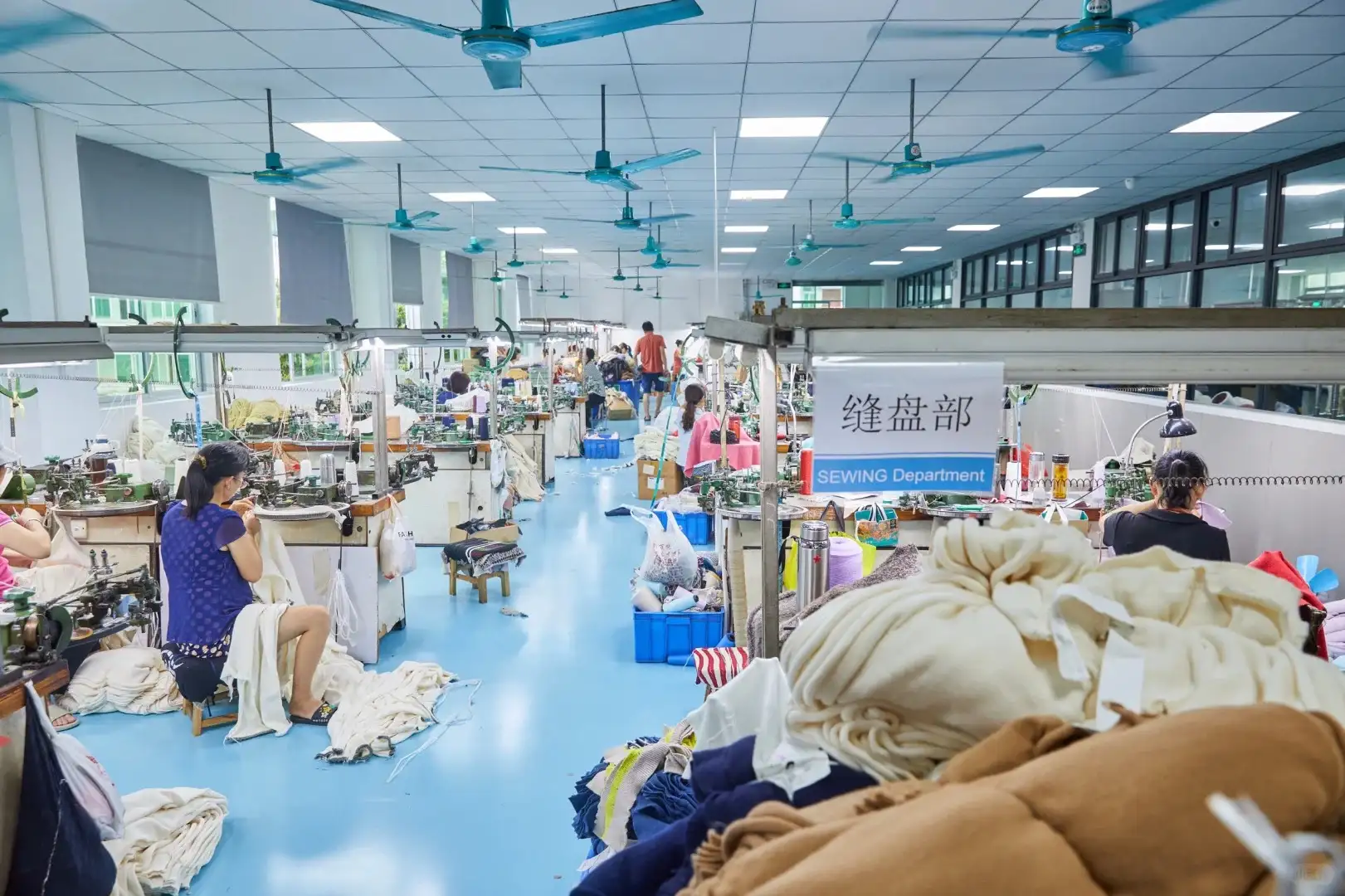
Polish wholesalers source cashmere from Asia because established production hubs can combine product development, flexible quantities and export coordination. The advantage is not limited to cost. A specialized Chinese supply chain can coordinate yarn selection, sampling, machine programming, knitting, linking, washing, finishing, inspection, labeling and packing within one production ecosystem.
This model can support sweaters, cardigans, knitted tops, scarves and private-label collections for buyers serving Warsaw, Krakow, Gdansk, Poznan, Wroclaw and online retail channels. A wholesaler can test a style or color before making a larger seasonal commitment, but production capability, documentation, material availability and repeat-order consistency should be confirmed first.
Read the full guide here : OEM and ODM knitwear production process
How Can Buyers Identify High-Quality Cashmere Before Bulk Production?
High-quality cashmere should pass material, construction and post-wash performance checks before bulk approval. Polish wholesale buyers can use the following ten-step control sequence.
01
Confirm Composition
Confirm the declared fiber composition and yarn batch.
02
Check Hand Feel
Compare the sample hand feel with the approved reference.
03
Review Knitting
Check gauge, stitch density and loop consistency.
04
Measure the Garment
Measure key points against the approved size chart.
05
Test Wash Stability
Review shrinkage and shape stability after washing.
06
Assess Surface Performance
Assess pilling and fiber-shedding risk.
07
Inspect Construction
Inspect linking, neckline, cuffs and hem construction.
08
Approve Color
Compare the finished color with the approved standard.
09
Check Packing Details
Verify labels, packaging and carton marks.
10
Keep the Golden Sample
Retain the approved garment as the production comparison standard.
Buyer control point: An attractive photograph, soft hand feel or supplier declaration does not replace a physical approved sample and written specification. Bulk approval should be tied to measurable product criteria wherever possible.
How Should Cashmere Fiber Composition and Quality Be Verified?
A 100% cashmere claim should be connected to a specific yarn, production lot and, where necessary, an independent laboratory result. Supplier documentation should identify the fiber composition, yarn specification, color and batch used for the order. Internal microscopic screening can support preliminary review but does not replace independent laboratory analysis when this is required by the buyer, retailer or risk profile.
For harmful-substance testing, OEKO-TEX STANDARD 100 is a useful reference. Chemical restrictions affecting clothing should also be reviewed under EU REACH.
| Control Point | What the Buyer Should Confirm | Evidence |
|---|---|---|
| Fiber composition | Declared cashmere percentage and permitted fiber names | Yarn specification and supplier records |
| Production traceability | Yarn reference, color and production batch | Lot-linked records |
| Construction | Gauge, stitch density, linking and finishing | Approved sample and specification |
| Performance | Shrinkage, shape stability, pilling and shedding risk | Relevant test or approved performance record |
| Independent verification | Fiber analysis when justified by value, product risk or retailer requirements | Laboratory report linked to the tested material or garment |
Read the full guide here : knitwear yarn OEM guide
How Does a 50-Piece MOQ Reduce Cashmere Inventory Risk?
A controlled opening quantity allows wholesalers to test styles, colors, sizing and retail price points before committing more capital to inventory. This is particularly useful for new private-label collections, seasonal sweater programs, boutique capsules, premium gift ranges and online fashion drops.
MOQ for this sourcing program: 50 pieces per style per color. The quantity should still be broken down clearly by style, color and size in the RFQ and purchase order.
Available stock yarn normally gives the production team more flexibility in material allocation. Custom dyeing, multiple colors, complex stitches, special finishing and customized packaging can introduce additional yarn-mill minimums, setup requirements, surcharges or timing constraints. Those material and process conditions should therefore be reviewed even when the garment MOQ remains 50 pieces per style per color.
A lower-risk sequence is to approve a physical sample, place a controlled first order, review sell-through and reorder proven styles. Reorder consistency should also be considered when choosing yarn because later availability of the same yarn, batch or color can affect replenishment.
Read the full guide here : low MOQ knitwear manufacturer guide
What Is the Difference Between OEM and ODM Cashmere Production?
OEM suits buyers that already have a finished product specification, while ODM provides broader product-development support. Both routes should end with written approval of the sample, fiber composition, measurements, color, finishing, labels and packaging before bulk production starts.
| Model | Buyer Provides | Manufacturer Supports | Best Fit |
|---|---|---|---|
| OEM | Tech pack, size chart, yarn direction, colors and brand specifications | Technical development, sampling and production to the approved specification | Brands with an internal product team |
| ODM | Brief, references, target price and market position | Yarn, stitch, silhouette and collection-development options | Wholesalers needing product-development support |
Read the full guide here : Knitwear Tech Pack and RFQ Checklist
How Should Polish Buyers Audit an Asian Cashmere Supplier?
A cashmere sweater manufacturer should be checked for business identity, real production capability, technical experience and commercial controls before a substantial deposit is made.
- Verify business registration and the legal name connected to the company bank account.
- Confirm the factory address and request recent production images, a live video review or an appropriate factory audit.
- Check the actual knitting, linking, washing and finishing capabilities relevant to the planned product.
- Review samples comparable with the planned cashmere quality and construction.
- Check export experience with Poland or other EU markets where relevant.
- Verify the scope and validity of certificates for the actual yarn, material or facility rather than relying on a logo alone.
- Record the MOQ of 50 pieces per style per color, schedule, payment terms and claim procedure in writing.
- Confirm whether independent pre-shipment inspection is accepted.
Payment and fraud-control limitation
Avoid large payments to personal accounts. Catalog photographs alone do not prove ownership of manufacturing facilities. A buyer can strengthen verification through company records, samples, live production evidence, written contracts and independent inspection where appropriate.
Read the full guide here : knitwear quality control SOP
What Are the Polish Import Duty and Compliance Requirements?
Polish importers should separately verify customs classification, taxes, chemical compliance, consumer labeling and product-safety responsibilities. These are different compliance questions and should not be treated as one generic certification requirement.
| Requirement | Buyer Action | Reference |
|---|---|---|
| 1. EORI | Obtain or verify the EORI number required for customs operations. A company established in Poland applies through PUESC, while a company established in another EU Member State uses the EORI issued by that Member State. | PUESC EORI |
| 2. CN/TARIC classification | Determine the correct code according to product type, construction and fiber composition. | EU TARIC |
| 3. Customs duty | Check the duty rate and current trade measures for the confirmed tariff classification and origin. | EU TARIC database |
| 4. Customs value | Calculate customs value using the applicable product, transport and insurance costs under the EU customs valuation rules of the Union Customs Code, and confirm the result against the actual transaction and Incoterm. | EU Union Customs Code |
| 5. Polish VAT | Include Poland’s standard 23% VAT unless a different specific treatment applies, and confirm the accounting method for the transaction. | Polish Ministry of Finance VAT information |
| 6. Fiber labeling | State fiber composition using permitted textile fiber names and provide required consumer information in the appropriate language for the Polish market. | Regulation (EU) No 1007/2011 |
| 7. Chemical restrictions | Review applicable REACH restrictions and request supporting chemical-safety documentation where relevant. | European Chemicals Agency |
| 8. Product safety | Under the GPSR, an importer established in the EU that places a third-country product on the EU market is an economic operator with product-safety and traceability responsibilities. Confirm which operator holds them for your shipment. | General Product Safety Regulation |
| 9. Shipment documents | Prepare the commercial invoice, packing list, origin information, net and gross weights, carton information and agreed Incoterm. | Review documents before dispatch. |
| 10. CE marking | Ordinary cashmere sweaters generally do not require CE marking unless the product falls within a separate category governed by legislation requiring it; confirm any special regulated function before dispatch. | European Commission CE marking |
Regulatory sources and legal notice
The official references linked in this checklist come from European Commission and Polish government services, including the EU TARIC database and Union Customs Code, the textile-labeling and product-safety regulations on EUR-Lex, PUESC and the Polish Ministry of Finance. They were last verified in October 2026. This section is a general commercial overview for buying teams; it is not legal, tax or customs advice, and duty rates, tax treatment and product-safety obligations can change. Confirm each transaction against the linked official sources and, where necessary, a qualified customs representative or tax adviser in Poland.
Important customs limitation
There is no universal import-duty percentage that should be applied to every cashmere sweater. The final tariff treatment depends on the correct CN/TARIC classification, construction, fiber composition, origin and trade measures applicable when the goods are imported. Confirm the specific transaction through TARIC and, where necessary, a qualified customs representative.
How Should Buyers Plan Shipping and Customs Clearance to Poland?
Air freight is suitable for samples, urgent replenishment and smaller high-value orders, while sea freight is normally more cost-effective for larger wholesale shipments. The correct method depends on the commercial deadline and total landed cost rather than freight price alone.
| Shipping Method | Best Suited To | Main Trade-Off |
|---|---|---|
| Air freight | Samples, urgent replenishment and smaller high-value shipments | Faster transit but generally higher freight cost per unit |
| Sea freight | Larger wholesale orders where the launch schedule permits longer transit | Usually lower freight cost for volume but requires more schedule allowance |
Before production, confirm the Incoterm, transfer of risk, freight provider, cargo-ready date, required documents, product code, carton count and dimensions, net and gross weight, insurance arrangements and pre-shipment inspection standard.
EXW, FOB, CIF and DDP do not represent the same costs or responsibilities. Buyers should compare the total landed cost rather than factory price alone. Customs clearance and destination handling can also change the final warehouse date, so the commercial invoice and packing list should be reviewed before the shipment is released.
Landed-cost reminder: A lower freight quotation is not automatically the lowest-risk option. Compare transport cost, customs responsibilities, insurance, clearance charges, destination handling, transit risk and the required retail date together.
Frequently Asked Questions
These answers address the main decisions faced by Polish wholesalers importing cashmere clothing from Asia. Timelines, documentation and delivered costs depend on yarn, color, construction, order quantity, Incoterms and current customs classification. Commercial values should be confirmed in a written quotation, while customs and tax obligations should be checked through official sources or a qualified customs representative.
Can a Polish Wholesaler Start with 50 Pieces per Style per Color?
Yes. The MOQ used for this sourcing program is 50 pieces per style per color. Buyers should state the quantity by style, color and size so the manufacturer can review material allocation and production setup accurately.
Yarn availability, custom dyeing, gauge, construction, size range, finishing and packaging can still affect price, material-mill requirements and scheduling. These conditions should be reviewed in the written quotation before an order is released.
How Can a Buyer Verify That a Sweater Contains 100% Cashmere?
Verification should begin with yarn specifications and supplier records linked to the relevant production lot. Check the yarn supplier or reference, batch, color and declared composition. Hand feel and photographs are not sufficient because softness alone does not establish fiber composition.
When justified by order value, product risk or retailer requirements, arrange an independent fiber-composition test. The laboratory report should identify the tested yarn, sample or finished garment clearly enough to connect the result with the goods being purchased.
What Import Duty Applies to Cashmere Sweaters Entering Poland?
There is no single duty rate that applies to every cashmere sweater. The rate depends on the CN/TARIC code, product construction, fiber composition, origin and current tariff measures. The importer should determine the classification before shipment and verify it through the official TARIC database.
The landed-cost calculation should also consider customs value, Poland’s standard 23% VAT, customs representation, clearance and transport costs. Final treatment should be confirmed for the specific product and transaction.
How Should a Cashmere Sweater Be Labeled for Sale in Poland?
Fiber composition should be stated clearly using the fiber names permitted by Regulation (EU) No 1007/2011. Consumer-facing fiber information should be provided in the appropriate language for the Polish market. If a garment is not made exclusively from cashmere, its label should state the actual fiber composition rather than make a misleading 100% cashmere claim.
Buyers should also confirm retailer requirements for size, product code, care information, traceability, origin records and packaging before production.
Should Buyers Approve a Sample Before Bulk Cashmere Production?
Yes. A pre-production sample allows the buyer to verify composition, hand feel, color, measurements, stitch structure, linking, washing result, labels and packaging before bulk production. After approval, retain it as the golden sample for comparison with production goods.
YouTricot applies a symbolic sampling fee, which is fully deductible from later bulk production orders when bulk production of at least 300 pieces is confirmed for the same approved project. The quotation should record the deduction method, included revision rounds and any courier cost so the commercial scope is clear before development begins.
Read the full guide here : knitwear sampling cost guide
How Can Polish Wholesalers Reduce the Risk of Supplier Fraud?
Verify the supplier’s business registration, company payment-account name, factory address, product samples, export experience, documents and written commercial terms. Catalog photographs alone do not prove ownership of production facilities, so a live factory video or independent audit can provide additional evidence.
Payments should be made to the agreed company account. The purchase order should define product specifications, quantities, tolerances, timing, inspection, claim procedures and delivery terms. Before releasing a larger shipment, buyers can also arrange independent inspection and compare the goods with the approved golden sample.
Is Air or Sea Freight Better for Wholesale Cashmere Sweaters?
Air freight is generally more suitable for samples, urgent replenishment and smaller high-value orders because it reduces transit time but normally increases freight cost per unit. Sea freight is usually more economical for larger wholesale orders when the launch schedule permits a longer journey.
The decision should consider total landed cost, warehouse deadline, season, carton volume, insurance and delay risk. Confirm Incoterms, documentation responsibilities, customs clearance and destination charges before booking.
About the Author
Frank, Founder of YouTricot
Frank is the founder of YouTricot, a premium knitwear OEM/ODM manufacturer with 20 years of experience across Prato, Italy and Dalang, Dongguan, China. YouTricot operates 120 Shima Seiki and 80 Stoll computerized flat knitting machines covering gauges from 3G to 18G and specializes in cashmere, merino wool and silk-blend knitwear for EU and US fashion brands.
Request a Wholesale Cashmere Project Review
Before ordering a sample, prepare your current tech pack or reference images, target fiber composition, preferred hand feel, colors, size range, quantity by style and color, labels, packaging, sales market and required delivery date in Poland. This allows the technical team to review yarn availability, gauge, construction, sampling requirements, quality-control points, documentation and suitable shipping options against one defined project scope.
Validate Your Cashmere Specification Before Bulk Production
Send your tech pack or reference garment details, target composition, color plan, size range and quantity breakdown. YouTricot can review technical feasibility and prepare the information required for sampling and a project-specific quotation before you commit to bulk production.
Request a Cashmere Project Review
The technical review and commercial quotation do not replace customs, legal or tax advice for a specific Polish import transaction.