

Quick Answer
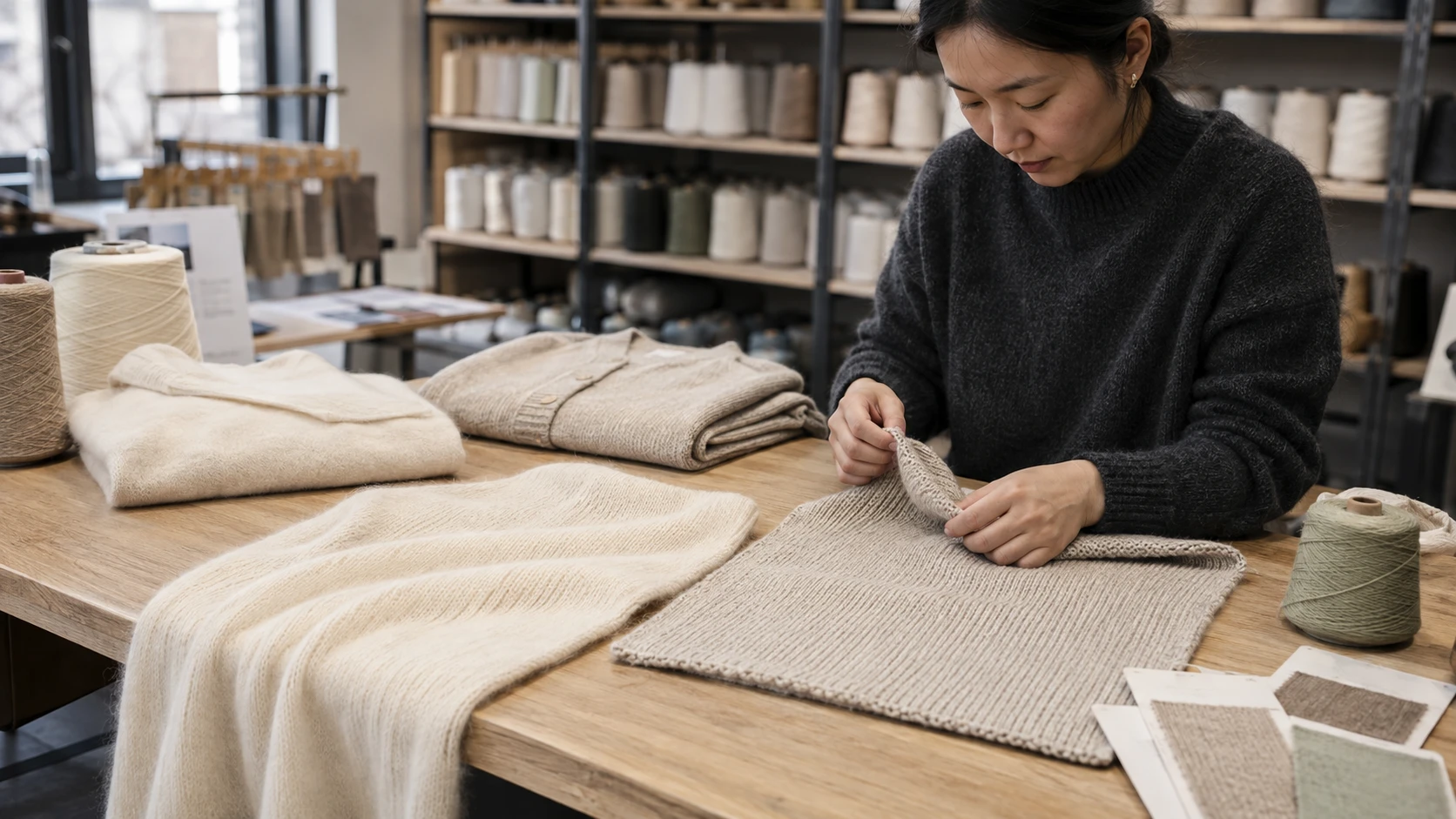
Choose 100% brushed cashmere for lightweight softness, luxury positioning, premium gifting and high-value capsule collections. Choose a 90% wool, 5% cashmere and 5% silk blend when oversized sweaters, cardigans or knit coats need more body, recovery and a more manageable wholesale cost structure. For EU and US OEM knitwear buyers comparing cashmere yarn with wool-rich blends, the decision should follow target retail price, garment shape, intended care and approved sample performance. Neither fibre composition alone guarantees low pilling or machine washability: confirm yarn quality, brushing control, garment testing and supporting material records before bulk approval.
Key Takeaways
1. 100% brushed cashmere is the stronger choice for luxury positioning, premium gifting and high-margin capsule collections. It offers an exceptionally soft, lightweight and warm hand feel, making it especially suitable for direct-to-skin sweaters, scarves and boutique hero products. The commercial trade-off is a higher material cost, stricter care expectations and the need to confirm yarn quality, fibre length, brushing intensity and testing before bulk approval. YouTricot can help buyers compare these production variables against a target retail price and intended delivery market.
2. A 90% wool, 5% cashmere and 5% silk blend is usually the more practical option for scalable wholesale knitwear. Wool provides structure and shape retention, cashmere improves softness, and silk contributes a smoother touch with subtle natural luster. This blend is well suited to oversized sweaters, cardigans, knit coats and relaxed silhouettes that need body as well as a premium hand feel. It gives EU and US brands a more manageable cost structure while supporting broader style coverage and repeatable seasonal programs.
3. The right material depends on retail price, garment type, target customer, order volume, pilling risk and care requirements—not softness alone. Pure cashmere creates the clearest luxury message, while a wool-cashmere-silk blend generally offers stronger recovery and greater commercial flexibility. Before confirming a yarn, buyers should compare the approved hand feel, garment structure, brushing method, composition records, care-label test results and the MOQ of 50 pieces per style per color. This prevents a premium sample from becoming an impractical bulk-production program.
Table of Contents
Cashmere vs Wool-Cashmere-Silk Blend Knitwear: At-a-Glance Comparison
For EU and US buyers, the material decision is primarily a choice between luxury emphasis and commercial flexibility. The table below compares 100% brushed cashmere with a common 90% wool, 5% cashmere and 5% silk blend. Neither material is universally better: cashmere is strongest where softness and prestige support a high retail price, while the blend is usually better where an oversized or structured garment must remain stable through washing, steaming, packing and retail handling.
| Decision factor | 100% Brushed Cashmere | 90% Wool / 5% Cashmere / 5% Silk |
|---|---|---|
| Hand feel | Exceptionally soft, light, warm and matte; strongest luxury signal for direct skin contact. | Smooth and premium with more body; silk adds subtle luster while wool supports structure. |
| Cost position | Higher material-cost position; best reserved for high-value styles and capsules. | More controlled, scalable cost structure for wider wholesale programs. |
| Pilling and surface risk | Requires careful yarn selection, brushing control and final testing to manage shedding and pilling. | Also needs controlled finishing; structured silhouettes are generally easier to manage. |
| Care expectation | Professional dry cleaning or careful hand washing is generally the safer recommendation. | Dry cleaning or careful hand washing is safest; a gentle wool cycle requires garment testing first. |
| Best product types | Luxury sweaters, base layers, scarves, gifting items and high-margin capsules. | Oversized sweaters, cardigans, knit coats, relaxed silhouettes and commercial collections. |
| MOQ and order suitability | MOQ: 50 pieces per style per color. Confirm yarn availability early; most suitable for focused, limited premium programs. | MOQ: 50 pieces per style per color. More practical for repeatable ranges; small-batch testing can reduce inventory exposure before scaling. |
| Market positioning | Luxury boutique, premium gifting and prestige-led seasonal storytelling. | Contemporary brands, online retailers, boutiques and scalable wholesale assortments. |
Hand Feel, Skin Comfort and Wearability
Cashmere is the stronger option when direct skin comfort and lightweight warmth are the main product promise. A 100% brushed cashmere sweater can create a soft, matte and emotionally premium experience that supports luxury base layers, fine sweaters and gifting products. A wool-cashmere-silk blend provides a smoother and softer hand than a standard wool style, but its principal advantage is balance: silk refines touch, cashmere adds softness, and wool gives a more substantial everyday feel. Buyers should assess swatches in the intended gauge and finish, not in isolation.
Structure, Recovery and Product Shape
Wool-cashmere-silk blends are generally the better choice when the garment requires body, thickness and shape retention. In the common 90/5/5 formula, wool provides the structural base, while cashmere and silk soften its appearance and touch. This makes the blend particularly effective for oversized sweaters, cardigans, knit coats and relaxed silhouettes that must remain stable after washing, steaming, packing and retail handling. Pure cashmere is ideal for light luxury products, but brands should test recovery carefully when the design depends on a more architectural or heavier silhouette.
Pricing and ROI for Wholesale Collections
Pure cashmere supports a premium retail story, while a wool-cashmere-silk blend usually supports a more scalable range. A 100% cashmere style can act as a high-value hero product that raises the perceived value of a collection, even when it is not the highest-volume item. Buyers should plan around yarn cost, an MOQ of 50 pieces per style per color, finishing time and care expectations. The 90/5/5 blend gives contemporary brands, boutiques and online retailers a premium hand feel with stronger commercial flexibility, making it appropriate for a wider autumn-winter assortment.
| Planning factor | 100% Brushed Cashmere | 90% Wool / 5% Cashmere / 5% Silk |
|---|---|---|
| Material-cost position | Higher material cost; evaluate whether the target retail price supports the luxury proposition. | More manageable material-cost structure for a wider wholesale assortment. |
| Collection role | A high-value hero item, premium gifting product or signature capsule style. | Supporting styles and repeatable seasonal programs with broader style coverage. |
| Approval priorities | Yarn quality, fibre length, brushing intensity, testing and care expectations. | Required body and recovery, approved hand feel, finishing control and garment testing. |
Price and ROI limits: These comparisons describe relative material and collection positioning. They are not unit-price quotations or guaranteed margins. Review yarn availability, finishing requirements, the approved garment and order details before confirming commercial terms.
Pilling Risk and Brushed Finishing
Brushed knitwear quality depends on finishing control as much as fibre choice. Brushing lifts fine fibre ends from the yarn surface to create a fuller, softer and more textured hand feel. Production normally combines controlled washing, surface brushing, shearing, steam setting and final inspection. A finish that is too light may not look premium, while an overly aggressive process can increase shedding or pilling. For either cashmere or a wool-cashmere-silk blend, buyers should approve the brushing standard, verify seam stability and review the finished garment after relevant tests.
Brushed Finishing: Production and Approval Steps
01
Controlled washing
Confirm the wash result against the intended hand feel and garment dimensions.
02
Surface brushing
Control the raised surface against the approved brushing standard.
03
Shearing
Review surface consistency as part of the agreed finishing process.
04
Steam setting
Review the intended finished shape and garment recovery.
05
Final inspection
Check the finished surface, seam stability and relevant test results.
Finishing limitation: A finish that is too light may not achieve the intended premium appearance, while overly aggressive brushing can increase shedding or pilling. Approve the finished garment after relevant tests; an unwashed development sample is not sufficient evidence.
Care, Testing and Care Labels
Care instructions should be based on tested garment performance rather than a generic fibre assumption. Premium brushed cashmere normally requires professional dry cleaning or careful hand washing, particularly where a soft raised surface must remain stable. A wool-cashmere-silk blend may be more robust in daily handling, but a gentle wool-cycle claim should only be made after garment testing confirms dimensions, recovery, surface appearance and seam stability. Buyers should finalize care labels only after the approved composition, gauge, finishing process and wash results are documented for the production style.
Care-label approval: A gentle wool-cycle claim requires testing on the actual approved garment. Confirm dimensions, recovery, surface appearance and seam stability before approving the final care instructions.
EU and US Compliance Considerations
For EU and US programs, material choice should be supported by composition records, chemical-safety evidence, care-label information and traceability documents. Commonly requested references may include OEKO-TEX STANDARD 100 for harmful-substance testing, the Responsible Wool Standard for wool sourcing and The Good Cashmere Standard for cashmere-related traceability. European buyers should also monitor the EU Strategy for Sustainable and Circular Textiles when planning durability and traceability requirements.
Evidence scope: Review the certificate holder, current validity, certified scope and connection to the actual material or order. These references support different aspects of sourcing and testing; they do not establish that every material or finished garment is certified. Confirm the requirements applicable to the product and destination market.
Best Material Choice by Product Type: Buyer Decision Checklist
Use the product role in the collection to choose the yarn before requesting a factory quotation. The checklist below turns the comparison into a practical buying decision. It is most effective when used alongside a defined retail-price target, garment reference, target quantity, intended market and approved hand-feel standard. If a collection includes both prestige-led and volume-led products, it can be commercially sensible to use pure cashmere for the hero item and the wool-cashmere-silk blend for more scalable supporting styles.
- Luxury base layers or direct-to-skin sweaters: choose 100% cashmere for maximum softness and lightweight warmth.
- Oversized sweaters, cardigans or knit coats: choose the wool-cashmere-silk blend for stronger structure and recovery.
- Premium gifting or boutique hero products: choose 100% cashmere for the clearest luxury message.
- Commercial wholesale collections: choose the 90/5/5 blend for a premium hand feel and more manageable scale.
- Brushed visual texture in a structured silhouette: test both options, but the blend is often easier to control.
- High-margin capsule collections: use 100% brushed cashmere as a signature product.
- Lower inventory exposure when testing a season: consider a wool-cashmere-silk blend with small-batch production.
Read the full guide here : knitwear yarn OEM guide
Read the full guide here : knitwear quality control SOP
FAQ: Cashmere vs Wool-Cashmere-Silk Blend
The most useful comparison questions are product-specific rather than fibre-specific. Buyers should assess how a material will perform in the intended silhouette, retail-price band and care environment before treating either option as the default premium choice. The answers below summarize the practical sourcing implications of pure brushed cashmere and a 90/5/5 wool-cashmere-silk blend for EU and US autumn-winter collections.
Cashmere vs Wool-Cashmere-Silk Blend Knitwear: Which Is Softer?
100% cashmere normally feels softer, lighter and warmer against the skin. It is the better option for premium base layers, fine sweaters, scarves and customers who prioritize a luxurious direct-to-skin experience. A wool-cashmere-silk blend can still feel smooth and premium because cashmere improves softness and silk adds a refined touch, but its wool content gives it more body and structure. Buyers should approve actual swatches and washed garment samples because fibre quality, yarn construction and finishing affect perceived softness.
Which material is better for oversized sweaters and knit coats?
A 90% wool, 5% cashmere and 5% silk blend is usually better for oversized sweaters, cardigans and knit coats. Wool gives the garment more structure, recovery and support for heavier or relaxed silhouettes, while cashmere and silk prevent the result from feeling like a basic wool knit. Pure cashmere can create an excellent luxury sweater, but it is less naturally suited to designs that depend on substantial body and shape retention. Confirm the garment’s dimensions, weight and post-wash recovery during sampling before bulk production.
Which material has lower pilling risk?
Pilling performance cannot be predicted from the fibre name alone. It depends on fibre length, yarn twist, knitting density, brushing intensity and finishing control. Long-staple cashmere and well-controlled wool blends can both perform well when the yarn and garment construction are appropriate. Brushing adds a soft, fuller surface by lifting fine fibre ends, but overly aggressive brushing can increase surface shedding or pilling. Buyers should specify the intended finish and approve testing results rather than relying only on an unwashed development sample.
Are brushed cashmere and wool-cashmere-silk knitwear machine washable?
Professional dry cleaning or careful hand washing is generally the safer care route for premium brushed knitwear. Some wool-cashmere-silk styles may tolerate a gentle wool cycle, but this should be confirmed through garment testing before final care labels are approved. Wash performance depends on yarn construction, garment density, brushed-surface stability and finishing control. A supplier should test the actual approved garment, not merely the yarn, because washing can affect dimensions, surface appearance, recovery and seam stability.
Which material is more suitable for EU and US wholesale buyers?
Choose 100% cashmere when luxury positioning and higher retail value are the commercial priorities; choose the wool-cashmere-silk blend when scalability and structure matter more. EU and US buyers should also consider composition records, chemical-safety requirements, care labeling and traceability evidence before confirming an order. Pure cashmere works well as a prestige-led hero item, while the blend is often more practical for wider size runs, more styles and commercial wholesale collections. The final decision should align with the retailer, target customer and product category.
Request a Material Consultation
Before developing an AW collection, send your target retail price, order quantity, style reference, preferred hand feel and delivery market for a practical material review. A useful review should clarify whether the product needs the luxury emphasis of 100% cashmere or the structure and commercial flexibility of a wool-cashmere-silk blend. It should also identify the composition record, brushing standard, sample plan, care-label testing and the MOQ of 50 pieces per style per color before bulk production.
Share your tech pack or style reference so the sampling plan and quotation can be based on the intended product.
About the Author
Frank, Founder of YouTricot
Frank is the founder of YouTricot, a premium knitwear OEM/ODM manufacturer with 20 years of experience across Prato, Italy and Dalang, Dongguan, China. YouTricot operates 120 Shima Seiki and 80 Stoll computerized flat knitting machines, covering gauges from 3G to 18G, and specializes in cashmere, merino wool and silk-blend knitwear for EU and US fashion brands.
Looking to compare cashmere, merino wool, and alpaca for your next sweater line? Our B2B procurement guide breaks down cost per kg, MOQ implications, supply chain geography, certification availability, and retail pricing strategy — all the data you need to make the right yarn decision for your brand.
See which fiber fits your target retail price, MOQ, and brand positioning.