
For many European fashion brands, knitwear is no longer just a seasonal category. It is becoming a core product line for brands that want higher perceived value, stronger customer loyalty and a clearer private label identity.
The challenge is execution.
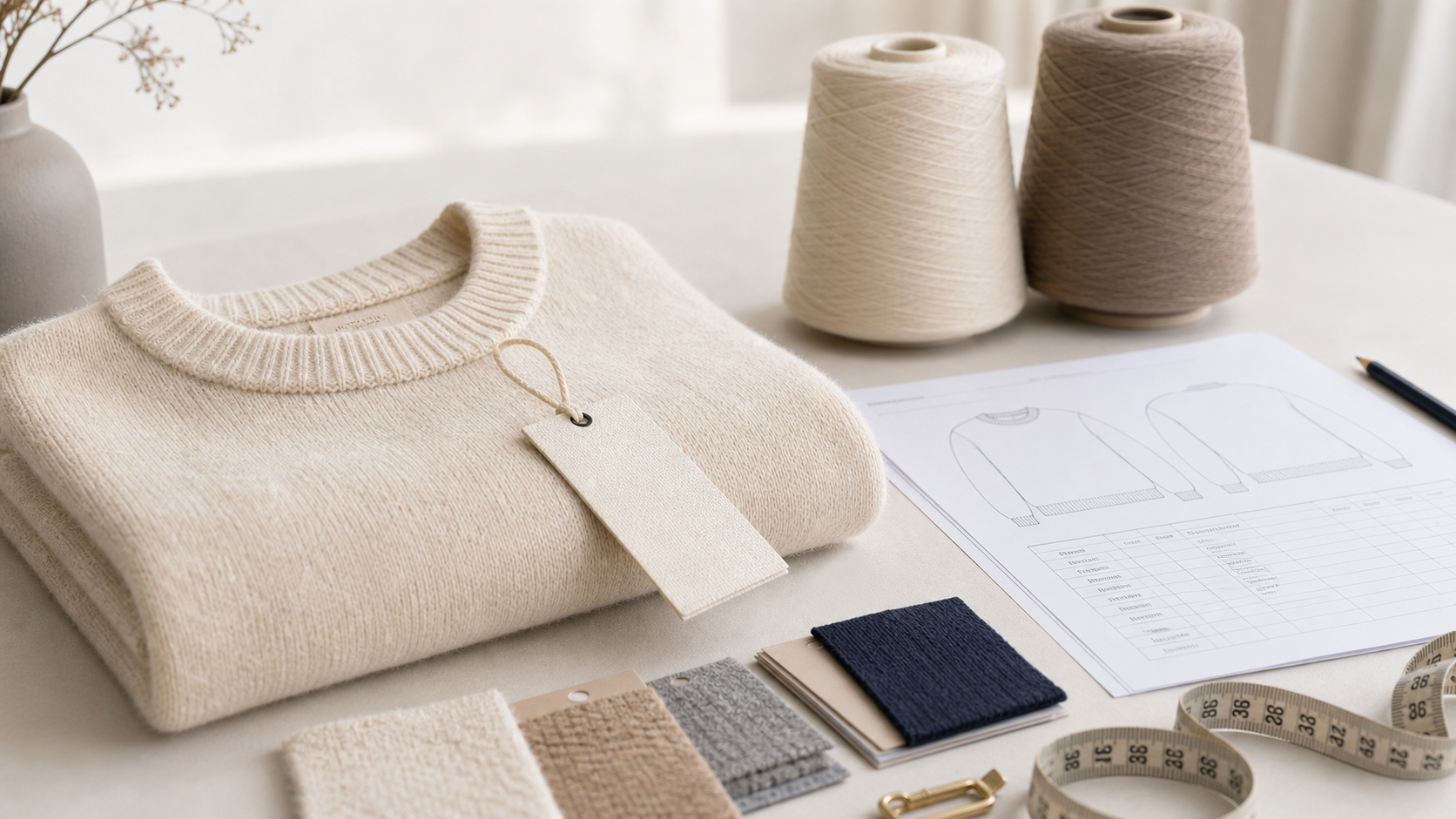
A private label sweater manufacturer must do more than produce basic sweaters. The right partner should help a brand turn its design direction, yarn preference, fit requirement, label system and packaging details into finished knitwear sold under the brand’s own name.
For startup brands, small designer labels, DTC knitwear brands and boutique retailers, this usually means finding a custom knitwear OEM partner that can support low MOQ knitwear, premium yarns, reliable sampling, quality control and export-ready communication.
YouTricot is a China knitwear manufacturer built around a Prato plus Dongguan model. With 20 years of knitwear industry experience, upgraded STOLL flat knitting capacity, Shima Seiki seamless and fine-gauge equipment, and a focus on cashmere, superfine merino wool and silk blend yarns, YouTricot supports private label knitwear projects for European brands that need quality without excessive inventory pressure.
For buyers still comparing production models, YouTricot’s China sweater OEM and knitwear OEM guide 2026 explains how custom knitwear production works from sampling to bulk manufacturing.
What Is a Private Label Sweater Manufacturer?
A private label sweater manufacturer produces sweaters and knitwear under the buyer’s own brand name. The factory does not sell the product as its own retail brand. Instead, it supports the buyer’s brand identity, design requirements, packaging details and market positioning.
Private label knitwear can include crew neck sweaters, V-neck sweaters, turtleneck knitwear, cardigan sweater wholesale programs, cable knit sweaters, chunky knit sweaters, cashmere sweater custom projects, merino wool sweater programs, knitted dresses, polo collar sweaters and custom packaging.
Private Label vs OEM vs ODM Knitwear
| Model | What It Means | Best For |
|---|---|---|
| Private Label Knitwear | The product is sold under the buyer’s own brand name, with custom labels and packaging. | Startup brands, DTC labels, boutiques and online retailers |
| Custom Knitwear OEM | The factory produces according to the buyer’s design, tech pack, sample or development brief. | Brands with clear design direction or existing styles |
| Knitwear ODM Service | The factory provides design options or development direction, then adjusts them for the buyer’s brand. | Buyers needing faster concept development or collection support |
In real production, these models often overlap. A new DTC knitwear brand may need knitwear full package OEM support, including yarn advice, sample development, labels and packaging. An established European fashion label may only need sampling, production and quality control.
Why European Brands Choose Private Label Knitwear
Private label knitwear gives European brands more control over product identity. Instead of reselling generic sweaters, a brand can define its own hand feel, silhouette, yarn composition, colour palette and packaging story.
This matters because knitwear is a high-touch category. Customers judge a sweater by softness, drape, weight, recovery, pilling resistance, neckline stability and how the garment feels on the skin. A small difference in yarn count, gauge, stitch density or finishing can change the whole product experience.
For European brands, private label sweater manufacturing is useful when they want to build a recognizable knitwear line, launch premium products without owning a factory, test new styles with low MOQ knitwear, avoid large seasonal inventory and develop repeatable core styles for boutiques, online stores or wholesale channels.
Low MOQ Knitwear for Private Label Brands
Low MOQ knitwear is one of the most important requirements for private label sweater projects. A new brand may not want to order 500 pieces per style before it has tested fit, price and sell-through. A boutique retailer may prefer a focused capsule collection across selected colours and sizes.
For premium knitwear, low MOQ is not only a financial advantage. It is a risk-control strategy.
High-end yarns such as cashmere, superfine merino wool, alpaca blends and cashmere silk blend sweater materials can be expensive. If the first order is too large, the buyer carries inventory risk before demand is proven.
A responsible private label sweater manufacturer should explain what MOQ is realistic for each project. MOQ depends on yarn availability, minimum dyeing quantity, gauge, knitting time, colour count, size range, stitch complexity, label requirements, packaging details and whether the style uses stock yarn or custom-developed yarn.
For brands planning a first capsule collection, the low MOQ knitwear manufacturer guide explains how small-batch production can reduce inventory risk.
Typical MOQ Range for Private Label Sweaters
The following ranges are for planning only. Final MOQ depends on yarn, colour, gauge, size range, stitch structure, trim requirements and packaging details.
| Project Type | Typical Planning Range | Key Factors |
|---|---|---|
| Stock yarn basic sweater | Lower MOQ possible | Yarn availability, colour count, simple structure |
| Premium cashmere or merino sweater | Medium MOQ usually required | Yarn cost, dye lot, gauge and finishing |
| Custom colour or custom yarn project | Higher MOQ likely | Minimum dyeing quantity and yarn development |
| Jacquard, intarsia or complex stitch sweater | Higher MOQ likely | Programming time, machine efficiency and defect control |
| Full private label package with custom labels and packaging | Depends on components | Label MOQ, packaging MOQ and shipment method |
For first-time brands, the safest approach is usually a focused capsule. Fewer styles, fewer colours and clearer yarn direction make low MOQ knitwear more practical and easier to control.
From Design Idea to Private Label Sample
The strongest private label sweater projects begin with a clear development brief. A buyer does not always need a perfect technical file, but the factory needs enough information to avoid wrong assumptions.
A useful first brief should include the target product type, reference images, target market, expected retail position, preferred yarn composition, desired hand feel, garment weight, size range, fit direction, colour plan, branding requirements, target MOQ and launch timeline.
After receiving the brief, the manufacturer reviews yarn feasibility, knitting gauge, stitch structure, shrinkage risk, finishing requirements and production cost. In knitwear, this stage is critical. Unlike simple cut-and-sew garments, a sweater is shaped by yarn, machine gauge, stitch density, washing and finishing at the same time.
Sampling fees are a normal part of serious custom knitwear OEM development. At YouTricot, sampling fees are symbolic and fully deductible from later bulk production orders.
Yarn Choices for Private Label Sweaters
Yarn selection defines the final character of private label knitwear. It affects softness, warmth, drape, price, durability, pilling performance and compliance documentation.
Common yarn options include cashmere yarn knitwear for luxury softness, superfine merino wool for comfort and breathability, cashmere silk blend sweater yarns for elegant drape, organic cotton knit programs for lighter seasons, recycled yarn knitwear for sustainability-led collections, and wool-cashmere blends for a balance of warmth, price and premium hand feel.
The best yarn is not always the most expensive yarn. The right yarn depends on the product promise.
A luxury boutique may need 100% premium Inner Mongolia raw cashmere fibers. A DTC brand may need a merino-cashmere blend that balances softness and price. A sustainability-focused label may ask for GRS certified knitwear or Responsible Wool Standard RWS knitwear documentation.
For buyers comparing cashmere, merino wool, cotton and blended yarns, YouTricot’s knitwear yarn OEM guide explains how material selection affects cost, hand feel, MOQ and production planning.
Labels, Packaging and Brand Details
Private label knitwear is not complete when the garment is knitted. Brand details influence how the product feels when the customer receives it.
Common branding options include woven neck labels, printed or woven care labels, hang tags, price tags, size stickers, polybags, folded packaging, barcode labels, carton marks and custom packaging for DTC shipments.
For European brands, these details should be planned early. Label placement, care information, fibre composition, country of origin and packaging requirements may affect both compliance and logistics.
Quality Control for Private Label Knitwear
Knitwear quality control must begin before bulk production. A finished sweater cannot be judged only by appearance. The manufacturer should control yarn, gauge, knitting tension, panel shape, linking, washing, finishing, measurements and final packing.
Key private label knitwear QC points include yarn inspection, colour consistency, dye lot control, knitting tension, panel size checks, linking quality, washing shrinkage, hand feel review, measurement tolerance, pilling review, twisting control, surface defect inspection, label accuracy, hang tag accuracy and final AQL inspection before shipment.
For premium buyers, quality control is also brand protection. If a private label sweater feels unstable, pills quickly or loses shape after washing, the consumer blames the brand, not the factory.
YouTricot’s quality control SOP for premium knitwear shows how a fiber-to-garment QC process can help brands reduce production mistakes before shipment.
Sustainability and EU Compliance
European buyers increasingly ask suppliers for clearer compliance and sustainability documentation. This is especially true for brands selling into Germany, France, the Netherlands, Scandinavia and the UK.
A sustainable knitwear manufacturer should be ready to discuss OEKO-TEX knitwear factory documentation, Responsible Wool Standard RWS knitwear options, Good Cashmere Standard alignment, GRS certified knitwear for recycled yarn programs, BSCI certified knitwear factory expectations, fibre composition accuracy, traceable material documents and restricted substance control.
For textile safety, many European buyers use OEKO-TEX Standard 100 as a familiar reference point when checking whether materials have been tested for harmful substances.
For wool programs, the Responsible Wool Standard by Textile Exchange is often used by brands that want stronger animal welfare and land management documentation.
For recycled yarn programs, the Global Recycled Standard helps buyers understand recycled content claims and chain-of-custody expectations.
For social compliance, many European companies also recognize the amfori BSCI framework as part of supplier evaluation and responsible sourcing.
If your brand is preparing for EU retail or wholesale channels, YouTricot’s EU-compliant knitwear manufacturer guide explains how traceability, documents and audit-ready sourcing should be planned before bulk production.
How to Choose a Private Label Sweater Manufacturer
If you are asking how to find reliable knitwear factory China suppliers, start with practical questions. The best partner should be able to answer clearly, not only send product photos.
Knitwear Manufacturer Checklist Questions
What yarn types do you work with most often?
Can you support low MOQ knitwear for a first private label order?
Do you provide pattern making and needle drafting?
What machine gauges do you offer?
Can you develop cashmere, merino wool or cashmere silk blend sweaters?
How long does sampling usually take?
Are sampling fees deductible from later bulk production orders?
What QC steps do you follow before shipment?
Can you support custom labels, hang tags and packaging?
What compliance documents can you provide for European buyers?
Do you have case studies for small brands or wholesalers?
How do you manage communication during sample revisions?
Why YouTricot Fits European Private Label Knitwear Brands
YouTricot is designed for European brands that need more than basic production. Our strength is the combination of European knitwear taste, China manufacturing execution and flexible private label support.
Our core advantages include Prato plus Dongguan experience, premium yarn development, low MOQ knitwear programs, advanced computerized flat knitting technology, 80 upgraded STOLL machines added in May 2026, Shima Seiki seamless and fine-gauge equipment, full private label support, quality control and compliance direction around OEKO-TEX Standard 100, RWS and GCS expectations.
For private label sweater buyers, this means one partner can support the journey from design idea to sample, from sample to low MOQ production, and from first test order to replenishment.
A related example is YouTricot’s custom knitwear manufacturer case study for a London online brand, which shows how a small premium brand moved from design idea to low MOQ knitwear production.
FAQ: Private Label Sweater Manufacturing
What is a private label sweater manufacturer?
A private label sweater manufacturer produces sweaters under the buyer’s own brand name. The manufacturer may support yarn sourcing, sampling, custom labels, packaging, quality control and bulk production while the finished product is sold under the buyer’s label.
What is the difference between private label knitwear and custom knitwear OEM?
Private label knitwear focuses on producing garments under the buyer’s brand. Custom knitwear OEM usually means the factory manufactures according to the buyer’s design, tech pack, physical sample or development brief.
What is the difference between OEM and ODM knitwear?
OEM knitwear is produced according to the buyer’s design or technical requirements. ODM knitwear includes more design or development input from the manufacturer, which can help brands build a collection faster.
Can small brands order low MOQ private label sweaters?
Yes, but realistic MOQ depends on yarn, colour, size range, gauge and stitch complexity. Low MOQ knitwear is most practical when the brand starts with a focused capsule collection and uses suitable yarns and colours.
How much does custom knitwear cost?
Custom knitwear cost depends on yarn composition, gauge, garment weight, stitch complexity, sample requirements, labels, packaging, order quantity and shipment method.
What should a brand prepare before contacting a sweater factory?
A brand should prepare reference images, target product type, market positioning, preferred yarn, size range, colour direction, label and packaging requirements, target MOQ and expected launch timeline.
How long does private label sweater sampling take?
Sampling time depends on yarn availability, design complexity, machine programming, finishing requirements and revision needs. Clear reference photos and yarn direction can make the sampling process faster.
Can private label sweaters include custom labels and packaging?
Yes. Private label sweater projects can include woven neck labels, care labels, hang tags, barcode labels, folded packaging, polybags and carton marks.
What compliance documents should European brands ask for?
European buyers may ask for OEKO-TEX, RWS, GCS, GRS, fibre composition documents, test reports and buyer-specific compliance records depending on the product and sales channel.
Is China still a good place to source private label knitwear?
Yes, when the supplier has strong technical capability, clear communication, quality control and export experience. A specialized China knitwear manufacturer can support flexible sampling, low MOQ production and premium materials.
Conclusion: Build a Private Label Knitwear Line With Lower Risk
Private label sweaters can help European brands build stronger product identity, higher perceived value and more flexible seasonal planning. The key is choosing a manufacturer that understands both the creative side of knitwear and the production reality behind yarn, gauge, sampling, QC and compliance.
For startup brands, DTC knitwear labels, independent designers and boutique retailers, YouTricot offers a practical path: premium materials, low MOQ development, private label support, fast sampling, quality control and export-ready communication.
If you are planning a private label sweater collection, send your reference photos, yarn direction, target MOQ, size range and launch timeline. A clear first brief will help the factory evaluate sampling, cost, lead time and the most practical production route for your brand.