

Quick Answer
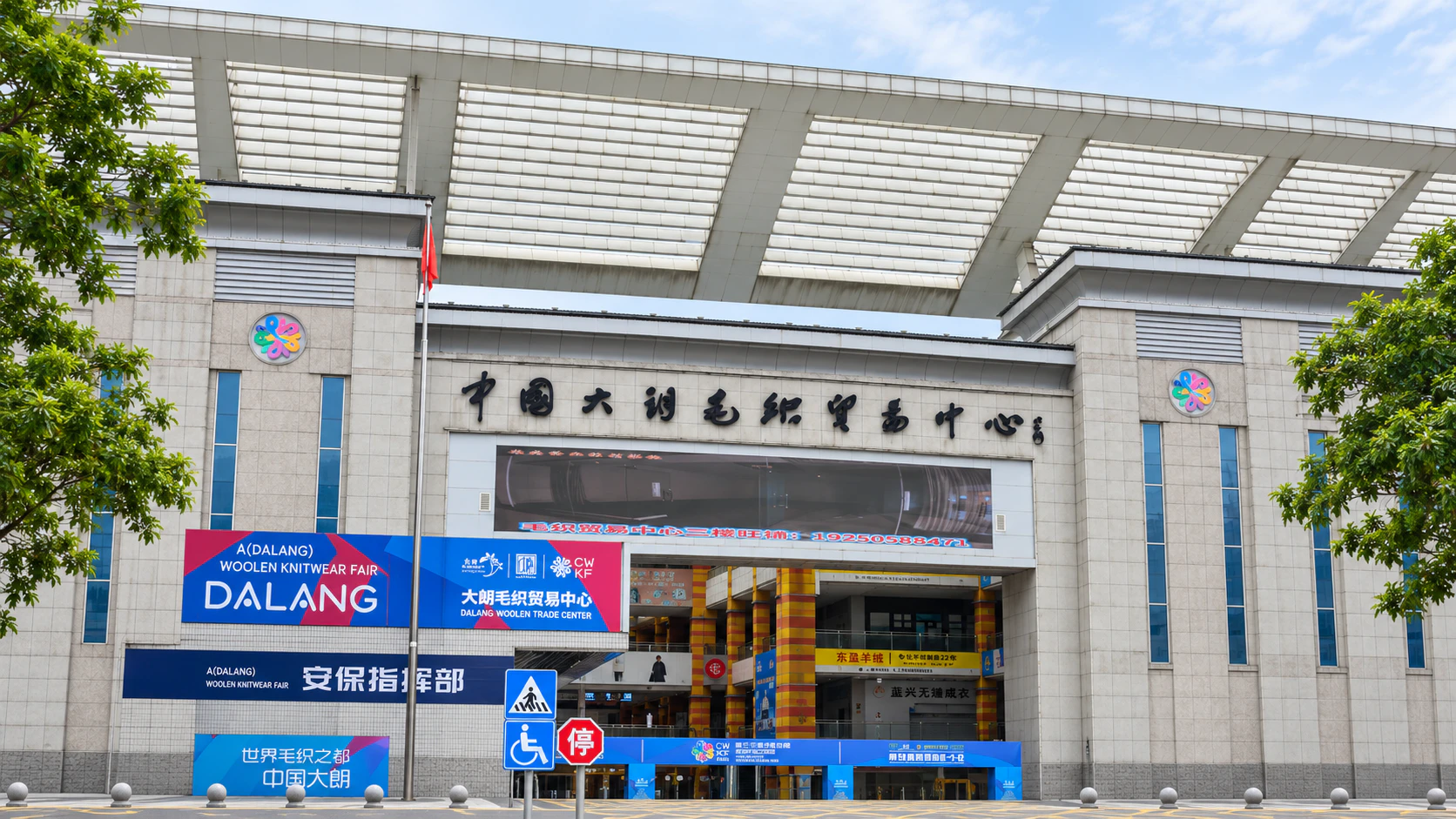
Dalang, in Dongguan, offers a knitwear supply network that takes a garment from yarn sourcing through computerized flat knitting, linking, washing and finishing to labels, trims and packaging. Overseas buyers can source yarn, arrange production and find woven labels, care labels, buttons, zippers and garment bags through this local network.
When choosing a knitwear factory in Dongguan, start with the garment you want to make. Ask the supplier to explain who will carry out each stage, where it will happen and how the intended yarn, construction and finish will be approved. That gives you a practical basis for deciding whether to shortlist the supplier, arrange a development trial or wait for missing information.
The advantage of Dalang is the range of connected suppliers and services. Making that network work for your order requires a clear product brief and someone responsible for coordinating the whole garment. This guide explains both: what you can source locally, and what to verify before making your next commitment.
1. Start with the Garment You Need
A visit becomes much easier to assess when everyone is discussing the same garment. A showroom full of styles tells you something about the supplier’s offering. Your own brief gives the technical team a specific problem to work through with you.
It does not have to be a finished tech pack. What matters is being clear about what you already know. A reference photograph with no agreed measurements calls for development; an approved garment with a complete specification calls for a plan to reproduce it. The people you need to meet, and the work you need to see, will differ.
Illustrative example used in this guide: a brand has accepted the fit of a cardigan sample, but the final bulk yarn is still unconfirmed. The supplier also proposes using a separate business for bulk finishing. This is a hypothetical development situation, not a customer case or a report of a YouTricot order.
For that buyer, the visit needs to answer more than whether the factory can knit a cardigan. What did the fit approval actually cover? Who will help confirm the intended yarn? Where will the cardigan be finished, and who will compare the result with the brand’s requirements? Those questions give the meeting a purpose.
Send the supplier your current drawings or references, intended fibre and yarn direction, structure, fit and measurement information, colour and size plans, finishing expectations and intended care. Add the destination market, proposed quantity, budget basis and delivery milestone. Make provisional targets visibly different from approved requirements so the team can explain what still needs work.
The technical discussion should connect those choices. A request to review a swatch in the intended yarn and structure after the proposed finishing is more useful than a general assurance about quality. It brings the conversation back to the finished result you are trying to buy.
The same applies to equipment. When computerized flat knitting technology is proposed, ask how the setup relates to this garment and who will check the first output. That is a more informative discussion than collecting machine names. Choose a detail that matters to you—a neckline, a colourwork transition or a finished measurement—and work through how it will be developed and approved.
2. From Yarn to a Finished Garment: Dalang’s Supply Network
A sweater needs more than knitting. Yarn has to be selected, the design translated into workable construction, panels assembled, the garment finished, and the final labels and packaging prepared. Dalang’s appeal to a sourcing team is that these needs can be coordinated through a regional supply network.
There is published evidence of its scale. In its 1 January 2025 bulletin, the China National Textile and Apparel Council reported annual transactions of more than RMB 72 billion across Dalang’s knitwear supply chain, including more than RMB 35 billion in yarn. Its coverage of the November 2024 Dalang trade fair also described apparel, yarn and accessories, machinery and supporting services. These are reported regional trade values, not a measure of any individual factory’s capacity. See CNTAC Bulletin No. 351, pages 10–13.
The sourcing map below reflects Frank’s account of the local network. It shows the components and services a buyer can seek through Dalang; items procured there may originate elsewhere, and the required specification, quantity and availability still need to be agreed with the supplier.
| Stage | What the network offers | Why it matters to your garment |
|---|---|---|
| Yarn sourcing | Yarn suppliers and traders; yarn and colour selection. | Confirm the intended yarn reference and supply basis before treating a development sample as a bulk reference. |
| Development and programming | Sample development and programming for computerized flat knitting. | Translate the design into a construction and setup that can be reviewed on the intended garment. |
| Knitting production | Knitwear factories and computerized flat knitting services. | Match the proposed knitting route to the yarn, structure and garment details in your brief. |
| Linking and assembly | Linking, seaming and garment assembly services. | Review the joining method and workmanship at the neckline, shoulders and other relevant seams. |
| Washing and finishing | Garment washing and finishing services. | Assess the finished hand feel, appearance and measurements using the proposed treatment. |
| Buttons, zippers and other trims | Accessory suppliers for closures and garment details. | Approve the trim together with its attachment and the garment area it must work with. |
| Woven brand and size labels | Custom woven labels and size identification. | Agree the artwork, dimensions and placement before the labels are ordered and attached. |
| Care and composition labels | Printed or woven care and fibre-content labels. | Have the responsible team approve content for the intended market; label supply alone does not establish compliance. |
| Garment packaging | Garment bags and packaging supplies. | Agree the bag specification, garment presentation and packing instructions before the final packing stage. |
For the illustrative cardigan, that means the sourcing conversation can cover the intended yarn, the knitting and linking route, the proposed wash finish, the buttons, the brand and care labels, and the bag the finished garment will go into. Those choices belong in one development plan. A button change, for example, should be reviewed alongside the buttonhole and placket rather than left until packing.
You can ask the garment supplier to coordinate the package, or nominate particular yarn and trim suppliers yourself. In either arrangement, agree who orders each component, who approves substitutions and who checks that it reaches the correct production site. This is where a regional network becomes a usable supply chain for your brand.
3. Find Out Who Will Actually Make It
Once the garment is clear, the conversation can move from “we can make this” to the businesses and people who will do the work. Knitting, linking or other assembly, washing and finishing, inspection and packing each need a named operator and an address. Material supply, programming and specialist decoration belong in the picture where they affect the style.
The practical difficulty is that expressions such as “our factory” and “our partner” leave room for different interpretations. A workshop may belong to the seller, to another company in the group or to an independent business. Each arrangement needs to be described accurately. Where ownership is claimed, there should be documents that support the relationship; where work is coordinated, you need to understand that coordination.
For the illustrative cardigan, an external finisher is a place to investigate. The buyer needs to know who sends the finishing instructions, who acknowledges the garments received, and who checks them when they return. If the result is unsuitable, who decides on reprocessing, and who answers to the brand?
Those answers reveal more than the length of the supplier’s relationship with the finisher. A disclosed address is a useful start, but the working controls sit in the instructions, transfers and return checks. Work moved to an undisclosed location without the required approval creates a different problem: the arrangement being used no longer matches the one the buyer agreed to assess.
This is consistent with the OECD’s garment and footwear due-diligence guidance, particularly Box 2 on subcontracting. It recommends transparency and selection controls, and explains why a prohibition on subcontracting needs supporting measures. The guidance concerns responsible sourcing; it is not a quality approval for a particular factory.
Keep a simple list of operators and addresses alongside the commercial relationship: the seller, manufacturing businesses, exporter where applicable and payment beneficiary. Different names need an explained, documented connection. If you are still choosing how to work with a supplier, the separate guide to factory, trader and sourcing-agent roles covers that broader decision. Here, the aim is to make the proposed arrangement for your order understandable.
4. Look Beyond the Approved Sample
The sample is the most tangible thing in the discussion. You can hold it, try it on and point to what you want changed. That makes it valuable, but the approval attached to it needs to be equally clear.
In the cardigan example, accepting the fit has not settled the bulk yarn or finishing arrangement. The buyer still needs to assess the finished result using the intended inputs. Treating “sample approved” as permission for everything that follows would leave those decisions unresolved.
A useful comparison is to put the sample arrangement beside the bulk plan. Which material and colour references were used? Who knitted, assembled and finished the sample? Will the same businesses do the bulk work, with the same approved instructions? Mark what will stay the same, what will change and what is still unknown.
Temporary inputs deserve particular attention. A substitute yarn in an early fit sample may have served a limited purpose; record that purpose and the approvals still outstanding. A hand adjustment needs to find its way into the production instructions and the first-output check. Otherwise, the supplier and buyer may be referring to different versions of what “the sample” means.
When a material, setup, operator or finishing site changes, the next step should address that change. The cardigan buyer could agree a development trial using the intended yarn through the proposed bulk finishing site, with any remaining substitutions declared before work starts. The result would be reviewed against the requirements and references approved for that purpose. The trial would not establish the availability of that site for a full order.
Trace Authorised Work Through a Sweater Factory in Dongguan
The explanation becomes easier to assess when the supplier can connect it to an authorised sample or order. Another customer’s work needs permission to inspect, photograph or copy. An anonymised example can show how records are kept; it remains separate from proving suitability for your own design.
Start with the item in front of you. Its specification revision, yarn and colour references, finishing and approval status should be identifiable. Then follow a transfer: the sender’s dispatch record and the receiver’s acknowledgement should connect to the same work, even if the two businesses use different internal codes.
Style, revision, size or bundle identity, quantities, units and dates help make that connection checkable. On the return journey, a finishing batch should connect to the returned garments and their inspection. Held, repaired or rejected pieces need an explanation in the records; an apparent quantity difference is something to reconcile, not something to ignore or automatically call a failure.
For work that has reached packing, the same exercise can run backwards from a carton to the relevant production and material references. Earlier in development, it stops at the stage actually completed. A sample-room demonstration cannot establish shipment records for a production lot that does not yet exist.
Keep the connections when records are redacted
A buyer does not need another brand’s prices or identifiable designs to understand a record system. Consistent anonymous references can preserve the connections while protecting confidential details.
The following is an illustrative redaction model, not an actual customer file:
Sample and material: [style and specification revision] → [sample ID, approval purpose, approver and date] → [yarn specification, supplier, colour/lot and receipt/issue references].
Work and transfer: [operator and site] → [program/setup revision and production/bundle ID] → [sending/receiving sites, dispatch/receipt references, quantities, units, dates and exceptions].
Return and release, where completed: [finishing batch and instruction revision] → [return checks, repairs/rejections and disposition] → [final inspection, release and carton references].
If quantities are withheld, mark the quantity check as incomplete. Note any other information you could not verify in your visit report.
To understand what an approved sample allows the factory to do next, see our guide to sample approval and production release.
5. What to Check at a Dalang Knitwear Factory
A visit produces observations. The judgement comes from how closely those observations relate to the claim you are assessing.
There is a useful difference between writing “we saw the selected style being linked at this site” and writing “linking verified.” The first describes something you can support. The second leaves unclear whether you checked the operator, workmanship, available capacity or control of the whole order.
Photographs help when they are authorised and attached to a date, site, process and relevant reference. Their value is in recording what was visible. They do not establish equipment ownership, future availability or consistent performance across every garment made there.
Availability needs its own conversation. Your order will depend on material readiness, approvals, people, equipment and any external bookings. A dated production plan can show how the supplier proposes to fit those together and which stage is most likely to constrain the order. Seeing knitting in progress leaves linking or finishing availability open. A successful development trial answers a technical question; it cannot confirm capacity for the entire order.
Tests and certificates need the same attention to scope. A result becomes useful when you can identify the tested sample, its material, colour and finish, the method used and the acceptance requirement. ISO 6330:2021, for example, specifies domestic washing and drying procedures for textile testing. Your sweater’s commercial acceptance limit still needs to be agreed with the responsible technical team or laboratory.
For an OEKO-TEX® STANDARD 100 claim, the official Label Check gives you a place to check the certificate number. The holder and article scope then need to match the claim being made. The 2026 standard distinguishes the label from a general quality label. Fit, performance after cleaning and every applicable legal requirement do not follow automatically from that certificate.
This keeps the conclusions proportionate. You can acknowledge what the supplier has shown while leaving a material question open. A technical sourcing visit also has a defined purpose; labour, environmental or legal-compliance approval may require additional evidence and qualified assessment.
6. Make Your Dalang Visit Worth the Trip
Dalang is within Dongguan. Its knitwear context is useful because it helps a buyer understand why several specialist businesses may be involved in the proposed work. The companion article on Dalang’s knitwear history and production transformation explains how that network developed. For this visit, the useful next step is to find out which parts of it would be involved in your order.
That gives the itinerary a practical starting point. In the cardigan example, the uncertain finishing arrangement deserves time and the right technical contact. A longer tour of the knitting room would leave that question unanswered.
Before arranging the trip, send the current brief and ask the supplier to confirm the meeting and production addresses, the people who can discuss the work, and an authorised sample or order that can be followed. Access to external premises, documents and photography should be agreed in advance. A showroom meeting, sample-room discussion and production review can each be useful, provided their purposes are clear.
The preparation reply tells you how much the visit can cover. An unconfirmed address makes that part of the itinerary provisional. If relevant work will not be running, the meeting may still support a document review, while the production observation remains outstanding. If photographs are restricted, agree how findings can be noted. The restriction and the available alternative both belong in your assessment.
Where a site cannot be visited, an authorised remote document review or an appropriate trial may help with a specific question. Record the limit of that alternative. Seeing a finished item does not establish everything that a site review might have examined.
One further distinction matters: a yarn warehouse, an active machine and a packed carton may belong to different orders. They can be useful demonstrations without forming a traceable sequence. The supplier needs to identify the common references before you treat them as one connected example.
Confirm appointments and travel arrangements for the actual date, allowing time for transfers and discussion. There is no universal journey time or number of factory stops that makes a visit sufficient. The better test is whether the people, places and records on the itinerary can address the questions you brought.
7. Keep a Record You Can Use Afterwards
After the visit, a colleague who was not there should be able to understand why you want to proceed—or why you do not. That is what the working record is for.
Give it a short header: the supplier and contracting entity, the style and brief revision, the order scope being discussed, the visit date, reviewer, sites and agreed confidentiality limits. This prevents notes from different products or meetings being treated as if they describe the same decision.
The worksheet below brings the main questions together. It is a blank buyer tool, not a set of supplier findings. Alongside each row, add the document or sample reference you actually reviewed, your observation and anything still missing.
| What to check | Who and where | What to look at | What happens next |
|---|---|---|---|
| Does the proposed work suit the garment? | Developer, programmer and sample room. | The current brief, a finished swatch and an explanation of unresolved details. | Agree what development work is still needed. |
| What changes from sample to bulk? | The people and sites making each version. | A comparison of yarn, colour, setup, assembly and finishing, with substitutions identified. | Decide which changes need a trial and who will approve them. |
| Who will knit the order? | Knitting business, address and relationship to the seller. | Material IDs, the instruction/program reference and the first-output check. | Connect the work to the current approved version. |
| How will assembly be controlled? | Linking/assembly business and receiving contact. | Bundle and size IDs, dispatch/receipt records, seam reference and repair records. | Resolve shortages, mixed versions or unexplained transfers. |
| What happens at the finisher? | Washing/finishing business and address. | The finished reference, instructions, batch ID, return checks and any reprocessing. | Try the intended material through this arrangement if it remains unproven. |
| Who checks and releases the goods? | Inspection and packing locations; release decision-maker. | The applicable requirements, identified reports, held goods and carton/order references. | Review actual release records when that stage is reached. |
| Can work move to another site? | Approved external businesses and the supplier contact responsible. | Site allocations, access arrangements, transfer records and change approvals. | Agree how a change is notified, reviewed and authorised. |
| Is the proposed production window workable? | The planner and the internal or external stage that may limit it. | A dated loading plan, material readiness, approvals and partner bookings. | Confirm missing dependencies or revise the plan; a sample trial cannot confirm full-order capacity. |
The follow-up is as important as the observation. “Finishing information to follow” leaves the next step vague. A more useful entry states the missing information, who will provide it, when it is due and who will decide whether it is sufficient.
A reusable illustrative action format is: “Before [decision], [owner] will provide [evidence] by [date]; [reviewer] will assess it against [requirement].” If the information does not arrive, the question remains open and needs a new decision.
For a more comprehensive review within individual production areas, use the 64-point knitwear factory evaluation checklist. This worksheet helps you connect those areas across the businesses and locations proposed for your order.
8. Leave with a Clear Next Step
The useful outcome of a visit is a decision you can explain. A numerical score can obscure a critical gap if good marks elsewhere make an unknown material or undisclosed location seem less important. Keep the unresolved issue visible and decide what it means for the next commitment.
Shortlist the supplier when the proposed work fits the brief, the relevant operators and locations are identified, and the records support the work you reviewed. State the remaining development conditions. This supports further evaluation; it is not bulk-production release or approval of the supplier’s entire operation.
Arrange a focused trial when the supplier has explained the plan but a particular part of your product remains unproven. The cardigan example belongs here if the outstanding question is the intended yarn through the proposed finishing site. The trial needs to answer that question, with the result reviewed against agreed requirements.
Keep a decision on hold when essential information is missing. An unidentified finishing site, conflicting specification revisions or an unexplained change of operator each calls for a different follow-up. These are illustrative situations: define the affected decision, seek the missing explanation and agree what would allow it to proceed. A legitimate confidentiality limit may call for an authorised alternative rather than a demand for another customer’s files.
Stop for this sourcing brief when a material requirement cannot be met, important information is misrepresented or a critical gap will not be resolved. Record the reason and the scope assessed. That is a sourcing decision about this proposed arrangement, not a ranking of Dalang factories.
Give the next development order a clear purpose
For the illustrative cardigan, a useful next assignment would carry the open question into the work. The following illustrative development brief assumes that the bulk finishing site differs from the sample site and has not yet been approved. Quantity, costs, dates, tolerances and performance limits remain to be agreed.
Purpose: Assess the intended yarn and construction through the proposed bulk finishing site.
Work to agree: Name the brief revision, yarn and colour status, knitting/assembly references and finishing operator/address. Declare substitutions before starting, and specify the finished swatch or garment and checks required.
What comes back: The identified finished item, relevant transfer and finishing references, measurement results using the agreed method, any agreed care/performance test results, and a note of deviations or reprocessing.
Who decides: A named buyer reviewer compares the return with the written requirements and the references approved for this purpose, then records acceptance, corrective work or another trial.
What remains open: Approval applies to the work assessed. It does not automatically release bulk production, confirm full-order capacity or approve further changes.
This gives both sides a reason for the development work and a way to review it. If the intended material or operator remains unavailable, that limitation should be clear before anyone interprets the result. Repeating the earlier substitute arrangement would leave the original question open.
Carry the agreed site list, sample references and outstanding actions into development. When the material, operator or location changes, return to the affected question. The visit has then produced something you can use beyond the day itself.
Discuss Your Product and the Visit You Need
Send YouTricot your product brief and the processes you want to verify. Design references, yarn direction, intended quantities, destination market and target milestone help define the discussion. Explain which parts of the proposed work you want to see or understand, so the available documents, technical contacts, locations and permissions can be discussed before a visit.
Contact YouTricot to discuss your product brief and verification scope.
Sources checked on 25 October 2026. The cardigan, record model, worksheet and development brief are illustrative buyer tools. No actual visit, customer record, supplier approval or trial result is reported.