
Choosing the wrong yarn can lead to poor hand feel, pilling, shrinkage, high return rates and weak market acceptance. For fashion brands, yarn selection is not just a material decision. It directly affects product positioning, cost, durability, compliance and customer satisfaction.
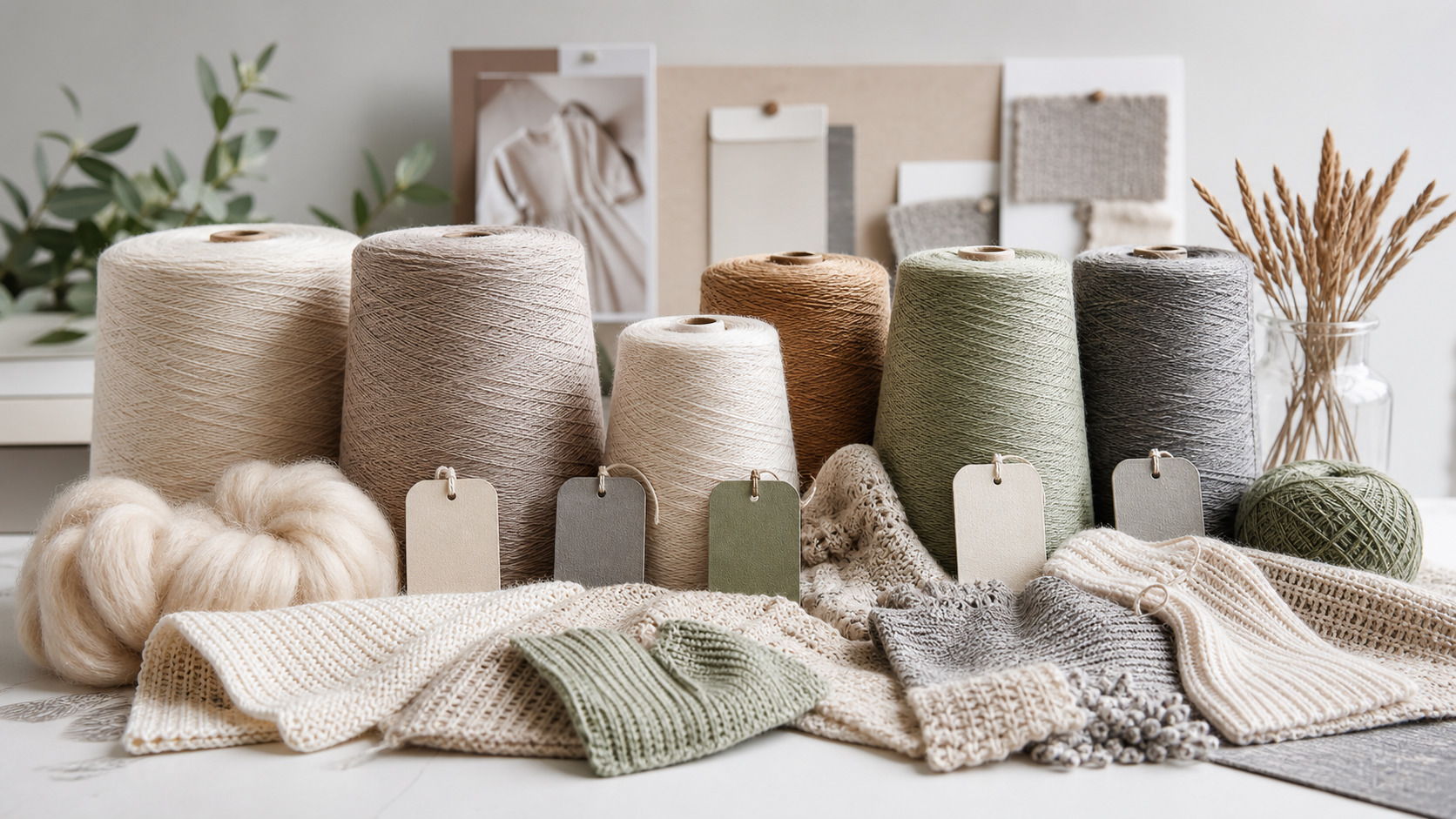
This knitwear yarn guide helps OEM brands understand the most common yarns used in custom knitwear production, including cashmere, merino wool, wool blends, cotton, silk blends, viscose, recycled polyester and acrylic blends. It also explains their hand feel, cost-performance and suitability for EU and US markets.
YouTricot is a knitwear OEM/ODM manufacturer based in Dalang, Dongguan, China. With experience in premium material development and the Dalang knitwear supply chain, YouTricot helps brands match yarn selection with MOQ, target price, hand feel and market positioning.
Why Yarn Selection Matters in Knitwear OEM
In knitwear OEM, yarn defines the entire product experience. It affects softness, warmth, elasticity, drape, pilling resistance, washing performance and final retail price.
The best yarn is not always the most expensive one. The right choice depends on the target customer, season, price point, market and brand positioning.
A reliable custom knitwear manufacturer should help buyers balance:
- Hand feel
- Yarn cost
- Gauge and stitch structure
- Durability
- Shrinkage control
- MOQ
- Compliance needs
- EU/US market preference
Common Knitwear Yarns for OEM Brands
Cashmere Yarn for Luxury Knitwear
Cashmere is suitable for premium sweaters, luxury cardigans and high-end winter knitwear.
Hand feel: Soft, smooth, lightweight and warm.
Best for: Luxury sweaters, private label cashmere collections and premium cardigans.
Buyer concern: Higher cost, care requirements, pilling control and fiber quality.
Merino Wool for Premium Everyday Sweaters
Merino wool is practical for mid-to-high-end knitwear OEM because it balances softness, breathability and commercial scalability.
Hand feel: Fine, smooth, elastic and comfortable.
Best for: Business casual sweaters, premium basics and EU-focused knitwear.
Buyer concern: Wool quality, shrinkage control, care labels and certification needs.
Wool and Wool Blends for Classic Knitwear
Wool and wool blends are widely used for winter sweaters, cardigans and commercial knitwear.
Hand feel: Warm, structured and slightly textured.
Best for: Classic sweaters, uniforms, winter cardigans and durable knitwear.
Buyer concern: Itchiness, shrinkage, pilling and washing performance.
Silk Blends for Lightweight Premium Knitwear
Silk is often blended with cotton, wool, merino or viscose to create smoother and more refined knitwear.
Hand feel: Smooth, light, breathable and elegant.
Best for: Spring/summer knitwear, women’s tops and premium lightweight cardigans.
Buyer concern: Cost, snagging risk, care requirements and color consistency.
Cotton and Pima Cotton for Breathable Basics
Cotton is breathable, skin-friendly and familiar to consumers. Pima cotton and combed cotton are stronger choices for premium basics.
Hand feel: Soft, breathable and matte.
Best for: Spring/summer sweaters, casual knit tops and everyday basics.
Buyer concern: Shape retention, shrinkage and drying performance.
Viscose, Tencel and Cellulosic Blends
Viscose and lyocell-based yarns are often used for soft, drapey and lightweight fashion knitwear.
Hand feel: Smooth, soft, cool and drapey.
Best for: Women’s fashion knitwear, summer tops and lightweight cardigans.
Buyer concern: Wet strength, shrinkage and sustainability documentation.
Recycled Polyester and Recycled Blends
Recycled polyester can support recycled-content positioning when backed by proper certification.
Hand feel: Smooth, light and stable.
Best for: Functional knitwear, casual sweaters and sustainability-oriented collections.
Buyer concern: Certification, recycled content percentage, breathability and hand feel.
Reference link : Textile Exchange Recycled Standards
Acrylic Yarn for Cost-Sensitive Knitwear
Acrylic yarn is often used for entry-level sweaters, promotional knitwear and high-volume fashion styles.
Hand feel: Light, fluffy and wool-like.
Best for: Price-sensitive sweaters, fast fashion knitwear and promotional apparel.
Buyer concern: Pilling, static, breathability and perceived value.
Blended Yarns for Flexible Knitwear OEM
Blended yarns are often the most practical choice for OEM brands because they balance softness, durability, cost and market positioning.
Common blends include:
- Cashmere + wool
- Merino wool + silk
- Cotton + wool
- Cotton + viscose
- Recycled polyester + viscose
- Acrylic + wool
- Nylon + wool
For low MOQ knitwear OEM and private label knitwear, blended yarns usually offer better flexibility than fully custom-developed yarns.
EU and US Market Preferences
European Market
European buyers often care about material quality, durability, sustainability claims and restricted substance requirements.
Common yarn directions include:
- Merino wool for premium everyday sweaters
- Cashmere and silk blends for luxury positioning
- Organic cotton and cotton blends for breathable basics
- Recycled yarns for sustainability-oriented collections
- Wool blends for classic winter knitwear
Reference link : EU Sustainable and Circular Textiles Strategy
US Market
US buyers often prioritize comfort, easy care, retail price and broad consumer appeal.
Common yarn directions include:
- Cotton blends for everyday comfort
- Acrylic blends for price-sensitive collections
- Merino blends for premium basics
- Recycled polyester blends for functional styles
- Cashmere blends for accessible luxury
Reference link : FTC Clothing and Textiles Guidance
Compliance Considerations for Knitwear Yarn OEM
For EU and US buyers, yarn selection should also consider compliance and documentation.
Brands should confirm:
- Fiber content
- Care label requirements
- Restricted substances
- Color fastness
- Shrinkage tolerance
- Pilling performance
- Recycled content claims
- Organic or sustainable claims
OEKO-TEX® STANDARD 100 is widely used to verify that textile products have been tested for harmful substances. It can support safer sourcing and compliance documentation, but final requirements should always be checked according to the destination market.
Reference link : OEKO-TEX® STANDARD 100
How to Choose the Right Yarn
For luxury knitwear, choose cashmere, merino wool, silk blends or high-quality wool blends.
For mid-range fashion brands, merino blends, cotton-wool blends and viscose blends offer a strong balance of softness, cost and commercial appeal.
For low MOQ knitwear OEM, stock yarns and common blended yarns can reduce sampling time and minimum order pressure.
For sustainability-focused brands, recycled yarns or certified materials may be suitable when documentation is clear.
For cost-sensitive collections, acrylic blends, cotton blends and recycled polyester blends can help control price while maintaining acceptable hand feel.
Recommended Internal Links
Learn more about our custom knitwear OEM capability : About YouTricot
Read our guide to small-batch knitwear OEM in China : Small-Batch Knitwear OEM in China
Explore more knitwear sourcing guides : Industry Information
Review real production examples : Business Case
Request a custom knitwear production quote : Contact YouTricot
FAQ: Knitwear Yarn Guide for OEM Brands
What is the best yarn for knitwear OEM production?
There is no single best yarn for every project. Cashmere is suitable for luxury knitwear, merino wool works well for premium everyday sweaters, cotton is good for breathable basics, and blended yarns are often best for balancing hand feel, price and durability.
Which yarn is most cost-effective for knitwear OEM?
Blended yarns such as cotton-wool, merino blends, viscose blends and recycled polyester blends are often more cost-effective than pure luxury fibers because they balance softness, durability and price.
Which yarn is best for luxury sweaters?
Cashmere, merino wool, silk blends and high-quality wool blends are commonly used for luxury sweaters. The final choice depends on the target price, garment structure, hand feel and care requirements.
Which yarn is best for low MOQ knitwear yarn OEM?
For low MOQ knitwear OEM, stock yarns and common blended yarns are usually easier to manage than fully custom-developed yarns. They help reduce sampling time, minimum order pressure and material risk.
What yarns do European fashion brands usually prefer?
European brands often prefer merino wool, cashmere, wool blends, organic cotton and recycled yarns, especially when the product needs to support quality, durability or sustainability positioning.
What yarns do US fashion brands usually prefer?
US brands often prefer cotton blends, acrylic blends, merino blends, recycled polyester blends and cashmere blends, depending on retail price, season and customer segment.
Can YouTricot help with knitwear yarn OEM selection?
Yes. YouTricot helps fashion brands choose suitable yarns for custom sweaters, cardigans, cashmere knitwear, merino wool styles, silk-blend knitwear, cotton-blend knitwear and recycled-yarn knitwear based on product positioning and target market.
CTA: Need Help Choosing Yarn for Your Knitwear OEM Project?
If your brand is facing high MOQ, unclear hand feel, unstable material quality, pilling risk, shrinkage issues or EU/US compliance concerns, YouTricot can help you choose a practical yarn plan before production begins.
Contact YouTricot to discuss your custom knitwear production project, including cashmere sweaters, merino wool knitwear, silk-blend styles, cotton-blend knitwear, recycled-yarn collections and low MOQ OEM orders.